
United Kingdom/united Nations
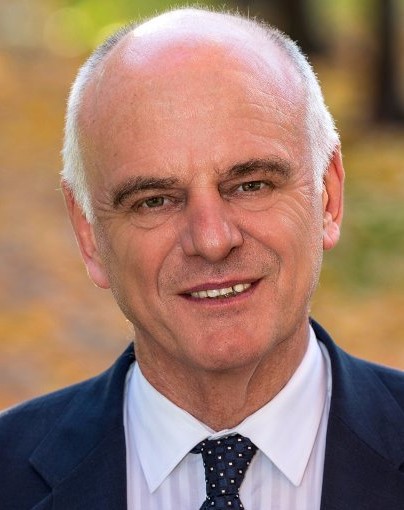
2018 Laureate: David Nabarro
Dr. Lawrence Haddad and Dr. David Nabarro received the 2018 World Food Prize for their individual and complementary global leadership in elevating maternal and child undernutrition to a central issue within the food security and development dialogue at national and international levels.
Maternal & Child Nutrition
David Nabarro’s inspirational global leadership in combating hunger and undernutrition positioned this issue as central to the global food security and development dialogue, closing the gap that had previously existed among nutritionists, public health practitioners, agricultural scientists, policymakers, humanitarians, and major donor institutions.
Through his work in the UN, he was able to unify the disjointed development efforts of these and other public and private sector organizations to successfully confront food insecurity and maternal and child malnutrition in Africa, South Asia, and Latin America.
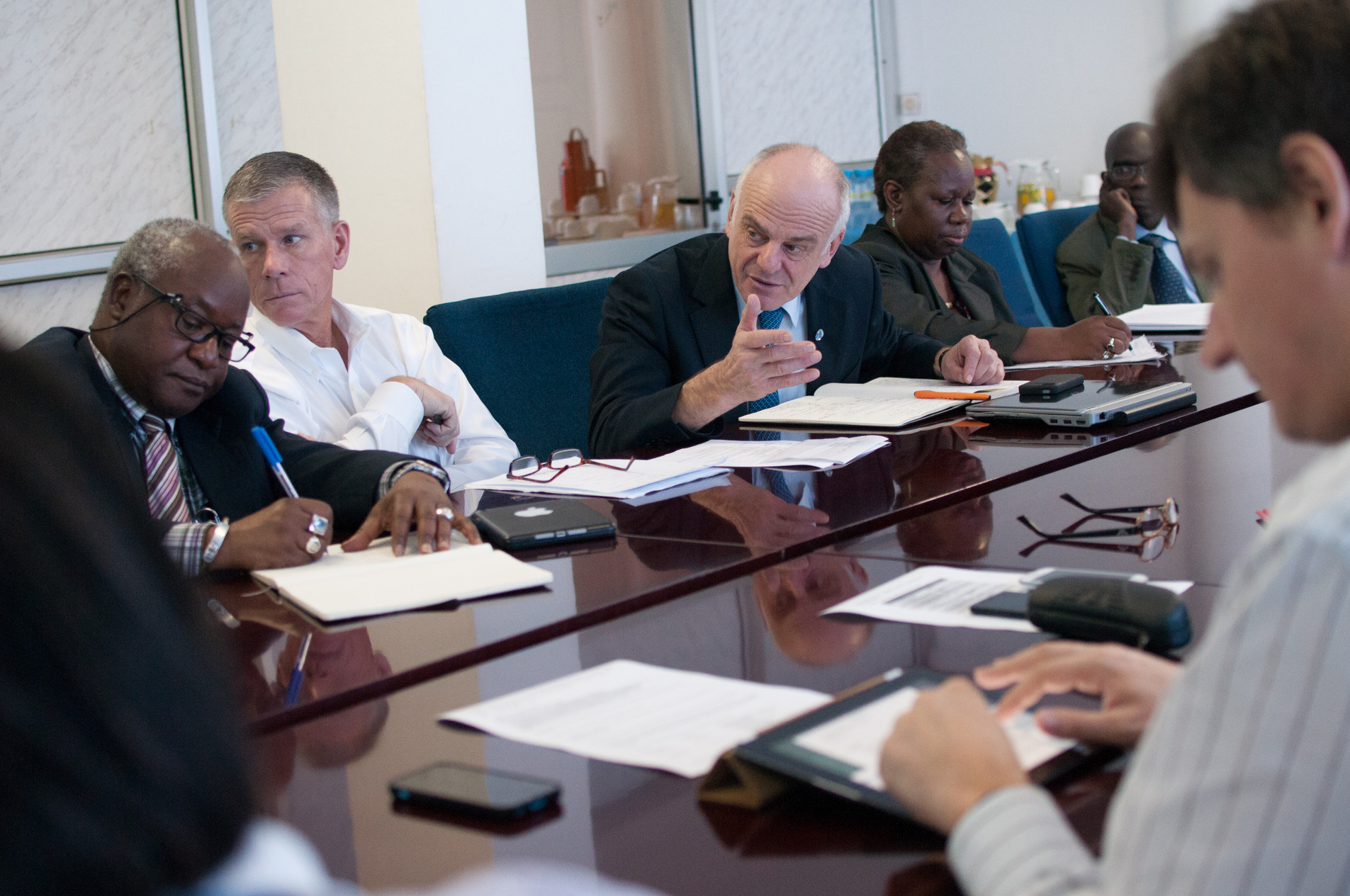
In 2008, in response to the food price crisis, UN Secretary-General Ban Ki-moon called upon Nabarro to head the newly-created UN High Level Task Force on Global Food Security. Two years later, Nabarro was also appointed the Coordinator of the new Scaling Up Nutrition (SUN) Movement. In these twin roles, he was able to bring together a broad group of stakeholders around nutrition and food security at the national, regional and global levels that included the leaders of dozens of countries suffering from high rates of malnutrition, the heads of UN agencies, representatives from donor groups, and members of civil society organizations.
As a result, agriculture and food went from being a low priority issue to mainstream. The SUN Movement with Nabarro at the helm headed a concerted effort to reduce childhood undernutrition and stunting in the first 1,000 days of life, from pregnancy to two years of age. Under Nabarro’s direction, SUN implemented a multi-sectoral, multi-level and multi-stakeholder approach to reduce child undernutrition and support future economic growth.
Never before had it been as clear to the global community what the economic and humanitarian costs of undernutrition were for the children affected, their families and their countries. The SUN Movement was built on the recognition of science-based evidence showing the magnitude of the problem and the realization that stakeholders were doing far too little to remedy it. Nabarro jump-started SUN into engaging multiple stakeholders and employing a combination of specific nutrition interventions that national governments led and implemented.
In 2014, when the SUN Movement was strong and making a significant impact in reducing child stunting, Nabarro was asked to take on the appointment of Special Envoy on Ebola and coordinate the UN’s response to the Ebola outbreak in Africa. When he stepped down as SUN’s
Coordinator to take up this new mission, 50 countries encompassing 83 million stunted children had joined the SUN Movement and endorsed nutrition-related laws and policies. The SUN framework and strategies that Nabarro established continue to mobilize political leaders in developing countries to improve the nutritional status of millions of mothers and young children.
When the Ebola crisis subsided, Nabarro assumed a new role as the UN Secretary-General’s Special Adviser on Sustainable Development and Climate Change and continued to serve as the Special Representative for Food Security and Nutrition.
Nabarro retired from the UN in June 2017, but continues to serve on SUN’s high level Lead Group, guiding SUN’s activities. By the end of 2017, 59 countries and 3 Indian states had joined SUN. Many, like Myanmar and Nigeria, reported a significant decline in the number of stunted children. Globally, the number of children under five too short for their age has decreased from 165 million in 2012 to 155 million in 2017.
Throughout his time at the UN, Nabarro’s work focused on bringing people and organizations together to work on the most urgent problems facing global health. He continues to work toward this goal through teaching as a professor at Imperial College’s Institute of Global Health Innovation and through 4SD, a social enterprise with a focus on partnering and integrated action that he started to support those implementing the 2030 Agenda for Sustainable Development.
Early Life, Education, and Career
David Nabarro was born in 1949 in London, and lived with his family in North Finchley until he attended boarding school in Eastbourne from the age of eight to thirteen. His father was an endocrinologist and his mother was also a professional in the medical field, so young David seemed slated from an early age to go into a medical career. He graduated from Oundle School at the age of 17 and volunteered for nine months to run Youth Action York, a youth volunteer movement that endeavored to improve the lives of the local poor, elderly, and disabled citizens. He believes that experience was the beginning of his lifelong interest in social work and set the tone for the kind of medical person he would become.
In 1967, Nabarro entered Oxford University and studied physiology for three years, followed by a year of research in endocrinology. By 1974, he had completed his medical degree at Oxford. He later earned a Master’s Degree in Public Health in Developing Countries at the London School of Hygiene and Tropical Medicine.
Led by his passion for helping the poor, Nabarro went to work in 1974 for a relief team with Save the Children in northern Iraq to provide health services and immunization to Kurdish children caught up in fighting between the Kurds and the Iraqi army under Saddam Hussein. That experience taught Nabarro how difficult it was for people to get good nutrition and to maintain their health under conditions wrought by war. This was a seminal period that shaped the development of his life and career.
He helped set up a child health service in eastern Nepal under the auspices of Save the Children from 1978-79, where he quickly learned about the relationship between nutrition and health and, in particular, the connection between malnourishment and the prevalence of infectious disease. It became clear to him that he wanted to work on the underlying causes of malnutrition, especially in children, and find ways to effectively address them. Splitting his time between teaching at the London School of Tropical Medicine and working on the ground in Southeast Asia from 1982 to 1985, Nabarro was able to gain firsthand knowledge about the complicated linkages between prosperity, nutrition, and health. He also came to realize that nutrition issues can’t be dealt with without full involvement of women because they have such a vital role not just in bringing children into the world but in nurturing those children.
His interest in working on child health guiding him, Nabarro helped set up a new Department of Community Health and taught at the Liverpool School of Tropical Medicine from 1985 to 1989.
He received the opportunity to learn about the British government’s foreign aid system when he became Chief of Health and Population in the British Embassy’s development administration (the precursor to DFID) and was sent to Nairobi, Kenya to help develop strategies to improve the national health and family planning programs in Kenya, Uganda, and Tanzania. After a year in Africa, Nabarro returned to his government position in London with the goal of developing stronger international health programs. Between 1990 and 1999, the British government shifted a large portion of its aid contribution to international health and development.
From 1999 to 2008, Nabarro served at the UN World Health Organization in several capacities: working on a special malaria project, revamping the emergency department, and coordinating the UN systems work on avian influenza and pandemic preparedness.
Nabarro passed away on July 25, 2025, at the age of 75.
Laureate Information