
World Food Prize
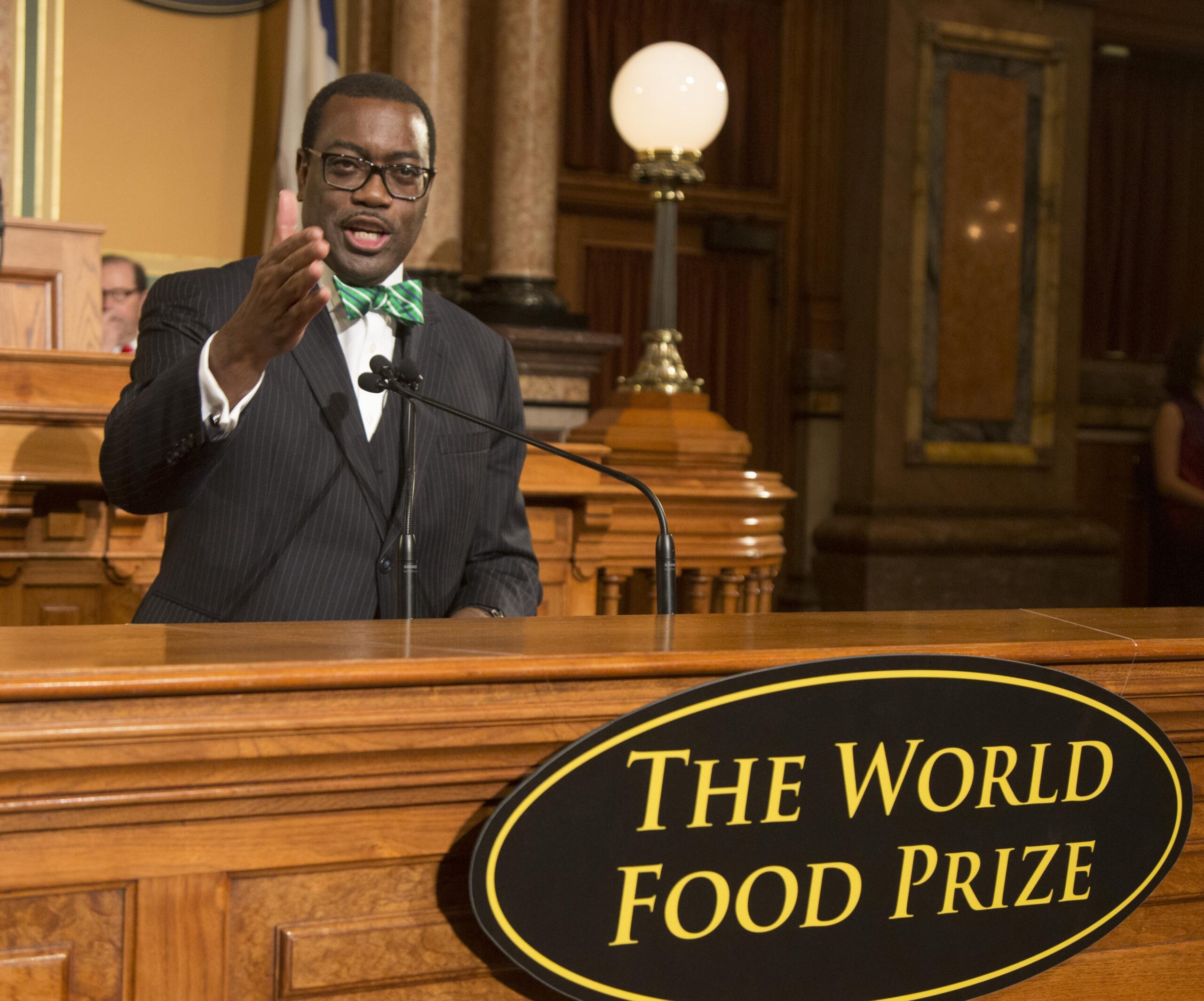
Every year presented in Iowa, this foremost international honor recognizes —without regard to race, religion, nationality or political beliefs — the achievements of individuals who have advanced human development by improving the quality, quantity or availability of food in the world.


ABOUT The Prize
The $500,000 award recognizes contributions in any field involved in the world food supply including, but not limited to: plant, animal and soil science; food science and technology; nutrition; rural development; marketing; food processing and packaging; water and the environment; natural resource conservation; physical infrastructure; transportation, storage and distribution; special or extraordinary feeding programs; social organization and poverty elimination; economics and finance; policy analysis; and public advocacy.
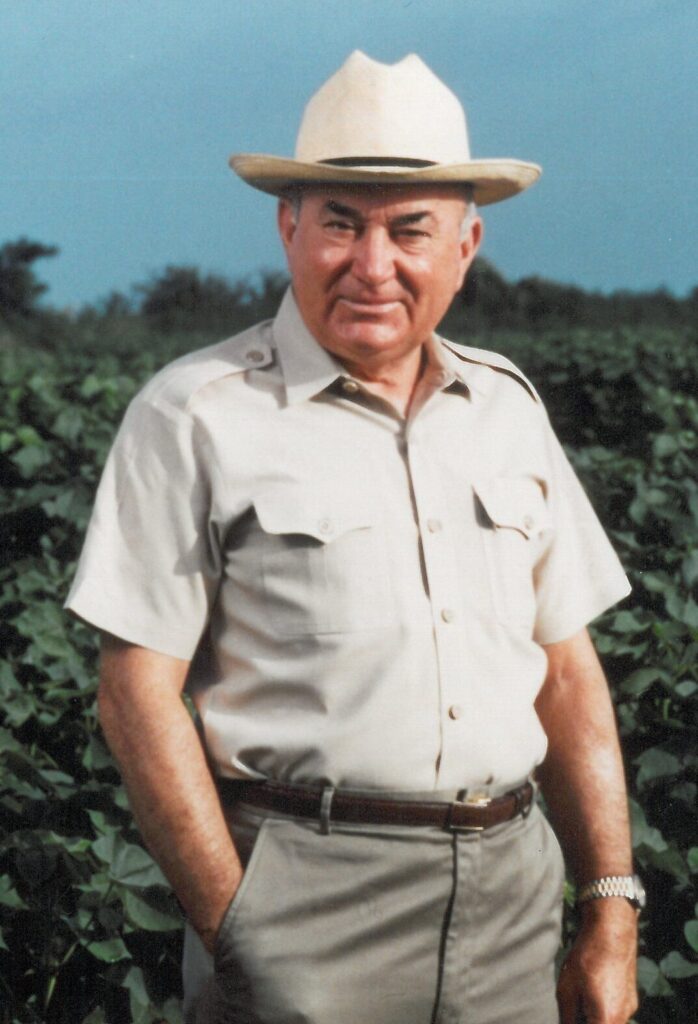
Dr. Norman E. Borlaug, recipient of the Nobel Peace Prize in 1970 for his work in global agriculture, envisioned a prize that would honor those who have made significant and measurable contributions to improving the world’s food supply. Beyond recognizing these people for their personal accomplishments, Borlaug saw the World Food Prize as a means of establishing role models who would inspire others. His vision was realized when the World Food Prize was created in 1986 with sponsorship by General Foods Corporation.
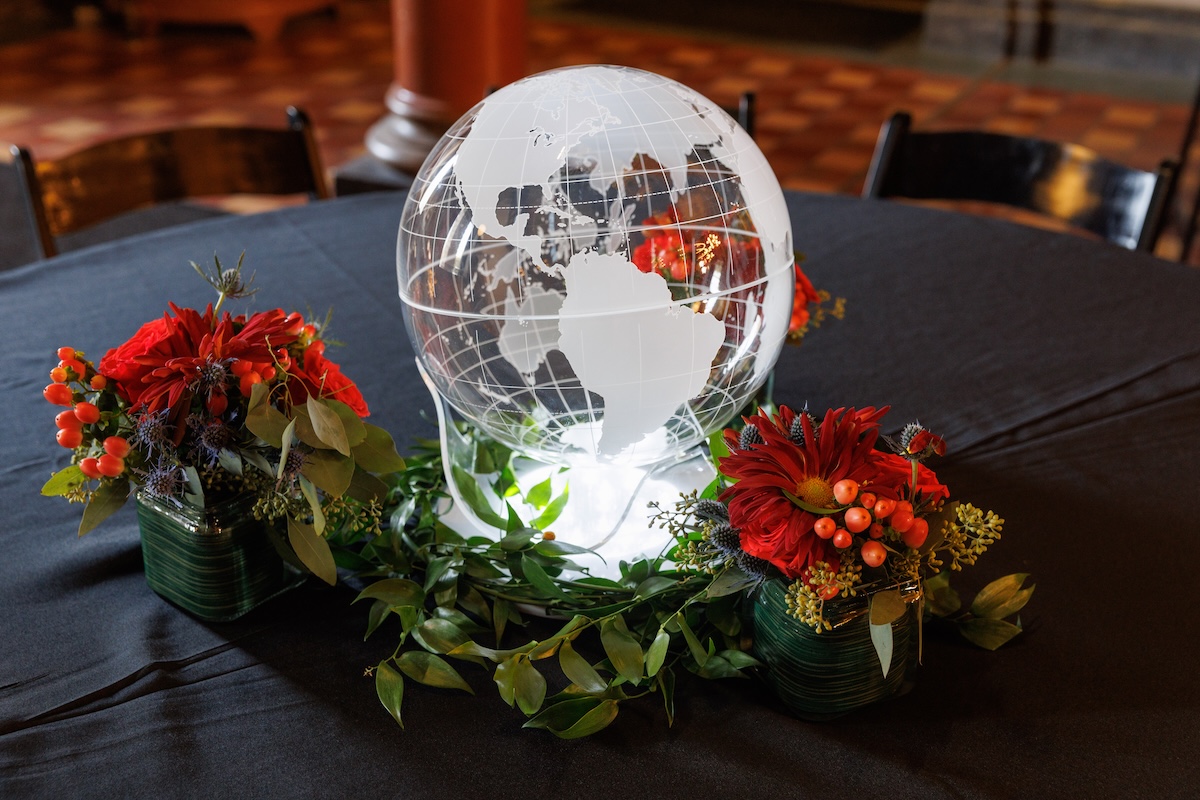
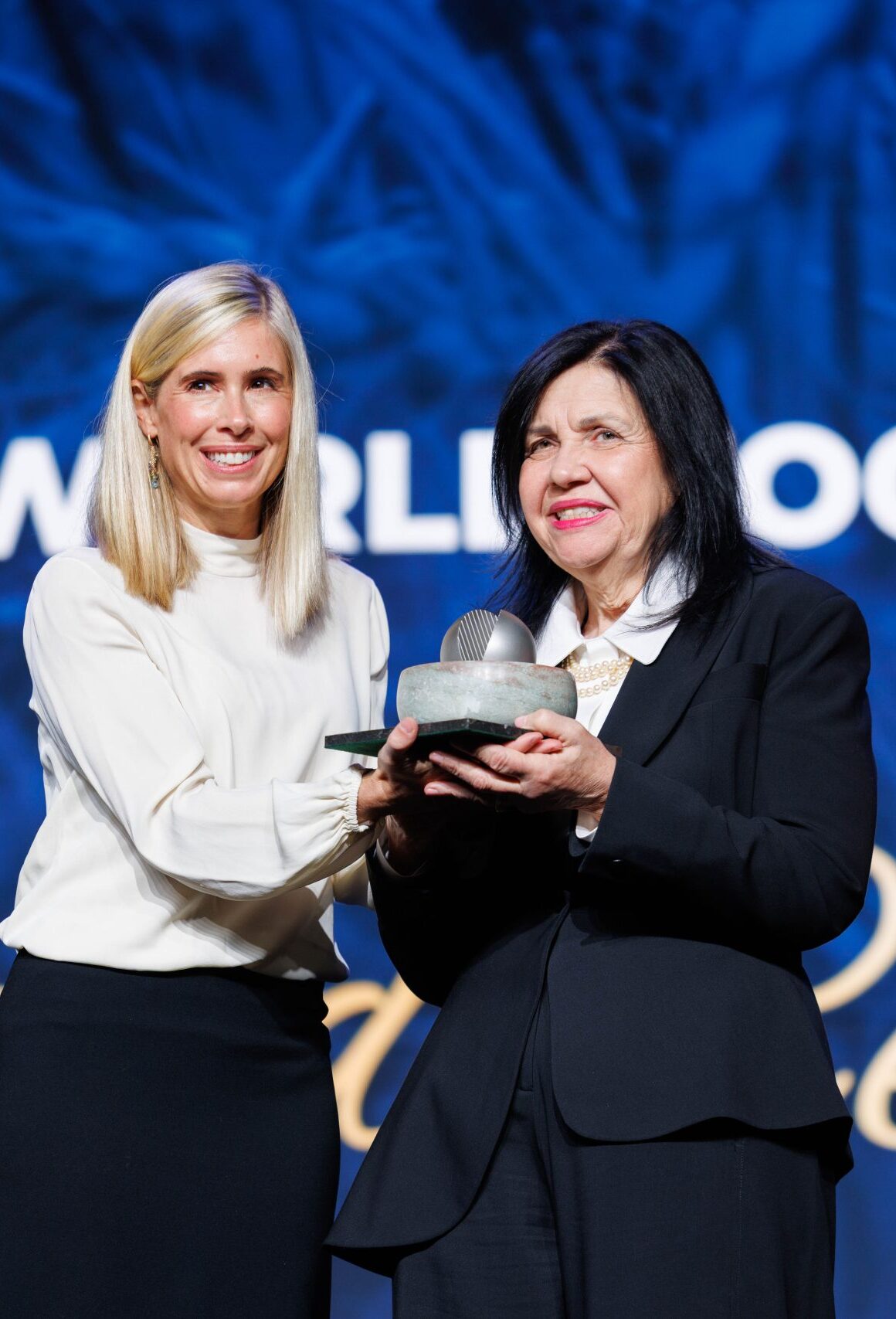
The name of the new Laureate(s) is announced in a special ceremony each spring. The World Food Prize is presented each October on or around UN World Food Day (October 16) in a ceremony during the Norman E. Borlaug International Dialogue. In addition to the cash award, the Laureate receives a sculpture designed by the noted artist and designer, Saul Bass.
Nomination
Criteria
The World Food Prize is awarded for a specific, exceptionally significant, individual achievement that advances human development with a demonstrable increase in the quantity, quality, availability of, or access to food through creative interventions at any point within the full scope of the food system.
Fields of achievement include, but are not limited to: soil and land; plant and animal science; food science and technology; nutrition; rural development; marketing; food processing, packaging and storage; water and the environment; natural resource conservation; physical infrastructure; transportation and distribution; special or extraordinary feeding programs; social organization and poverty elimination; economics and finance; policy analysis and implementation; and public advocacy.

Nomination Criteria
This exceptionally significant achievement must be shown to have resulted in a demonstrable increase in the quantity, quality, availability of, or access to food for a large number of people.
The impact of this achievement must be measurable, quantifiable, or otherwise demonstrated either in terms of reduced poverty, hunger or suffering; or enhanced health, nutrition, quality of life and well-being.
It must be clearly shown that this increase in food security was the direct result of the specific actions and activities of the nominee; i.e., without his or her specific accomplishment, no change would have occurred.
A nominee must be living and in sufficiently good health to attend the World Food Prize Award Ceremony. The nominee must be able to give an acceptance speech and agree to participate in selected media events and the World Food Prize Global Youth Institute at the time of the Award Ceremony.
The Prize is intended to be awarded to one person. In exceptional circumstances where an additional person (or persons) has collaborated in an indispensable way, more than one person may be included in the nomination. However, it must be demonstrated conclusively that each person contributed in an essential way, and that without each individual’s contribution, no achievement would have been possible. The World Food Prize Selection Committee will determine whether a joint nomination meets these criteria, and in cases where it judges this standard has not been met, to limit the number of persons being considered.
The deadline for submitting a nomination is May 1.
World Food Prize
Nomination and Selection Procedure
To be considered, nominations and all seconding and supporting documents must be submitted by May 1 of the year prior to which the candidate is to be considered. For example, to be considered for the 2027 Laureate, a nomination must be submitted by May 1, 2026. Incomplete nominations will not be considered.
The World Food Prize Foundation assists the Selection Committee by reviewing all nominations for appropriateness and completeness and then forwarding them to the Selection Committee.
The Selection Committee then reviews the nominations and recommends the recipient and first alternate it deems most worthy for the award based on the Prize criteria. Recommendations are forwarded through the President of the Foundation to the Foundation’s Chair of the Board of Directors and Council of Advisors for final approval.
The Selection Committee is composed of a panel of distinguished individuals who are knowledgeable about various aspects of plant science, agricultural production, agricultural policy, nutrition, food processing, food distribution, water and the environment.
Members of the Selection Committee remain anonymous except for the Chair, Dr. Gebisa Ejeta. The minutes of the Committee’s meeting and the views expressed by its members are not made public.
Factors Considered by the Selection Committee in Choosing a Laureate
The Selection Committee will consider the number of people affected by the nominee’s achievement as well as the extent of the change they experienced as substantial factors in evaluating the relative significance of the various individual achievements being considered.
Substantial weight will also be given to the complexity of the problem and the degree of difficulty involved in achieving success. Similarly, consideration will be given to the degree of ingenuity and determination of the nominee in attaining this change or advancement.
If the Selection Committee judges that the accomplishment was simultaneously attained by two or more individuals working separately, the Selection Committee may recommend that the Prize be shared.
In exceptional circumstances, the Selection Committee may also decide to recognize two or more individuals in the same year for: their separate, independent accomplishments in a common area of specialization; or their work in different areas of expertise, which contributed to a significant positive impact in a common country or geographic area, or in a common cause.
It is intended that all elements of the food system be recognized at some point in the awarding of the World Food Prize. In weighing the merits of nominations, consideration may be given to attaining a balance among all segments of the food system in the selection of the Laureate.
The World Food Prize recognizes achievements made by individuals working in every part of the world, representing the diversity of the global food and nutrition security community. It aims to give due recognition to individuals of diverse geographic areas, as well as gender, age, race and ethnicity.
The Selection Committee especially welcomes the nominations of individuals who have worked across political boundaries to feed hungry people in a way that promotes peaceful resolution of conflict, which would emulate Dr. Borlaug’s accomplishments in spreading the Green Revolution for which he received the Nobel Peace Prize.
World Food Prize Laureates and Global Announcement Ceremony
Explore the legacy of World Food Prize Laureates—leaders whose groundbreaking work has transformed global food security, agriculture and nutrition. Each year, the Laureate Announcement reveals the newest honoree recognized for advancing solutions to end hunger and improve food systems worldwide.
Discover their stories, learn about the announcement process and experience the global announcement that honors excellence in agricultural innovation and humanitarian impact.

World Food Prize Sculpture
As Dr. Norman E. Borlaug’s dreams of the World Food Prize materialized in 1986, its founding organizers sought a distinctive, commemorative piece to bestow upon World Food Prize Laureates.
A.S. “Al” Clausi, who served as the first Chairman of the World Food Prize Council of Advisors, was familiar with the work of designer Saul Bass. The artist had been hired to design a new logo and other pieces for the General Foods Company, where Clausi served as Senior Vice President of Research and Development.
In addition to his work as a graphic designer, Bass had made a name for himself as a master of film title design. He designed movie posters and title tracks for noted directors including Alfred Hitchcock, Otto Preminger and Martin Scorsese.
Confident with his reputation and pleased with the work he had done for General Foods, Clausi contacted Bass to design a commemorative piece for the fledgling World Food Prize. Bass’ only direction was to incorporate a bowl into his concept.
Several months later Bass presented the founding members of The World Food Prize with an earth-colored stone bowl made of alabaster, resting on a slate base, with a pewter sphere sitting in its center. From the sphere a wedge was removed, and the exposed interior was cut with a leaf design.
The piece was exactly what the World Food Prize founders had hoped for. They rationalized that the sphere symbolized the world; the leaf design, its food; and the bowl, the nourishment of its people. Thus, the piece was a fitting commemoration for the work of the World Food Prize Laureates.
Today, each World Food Prize Laureate receives a hand-crafted sculpture meticulously crafted to Bass’ original design in addition to a cash prize. Although the first three sculptures were given in wicker baskets lined with red satin in accordance with the original design, this was later seen as unnecessary. Today the award sculptures are presented free of adornment.
Bass passed away in 1996, his concept for the World Food Prize will undoubtedly endure for generations.

Promotional
Toolkit
The World Food Prize Foundation has created resources to assist our partners in spreading the word about the annual Laureate nomination process. Your help allows the Foundation to solicit the best nominations from across the globe as we aim to highlight individuals making strides in improving the quality, quantity and availability of food in the world for all. We value your support and we hope that you will help us spread the word about the World Food Prize through all appropriate avenues; from blogs and newsletters to social media and presentations. Please let us know if we can provide anything in another format.