
Dr. Norman E. Borlaug
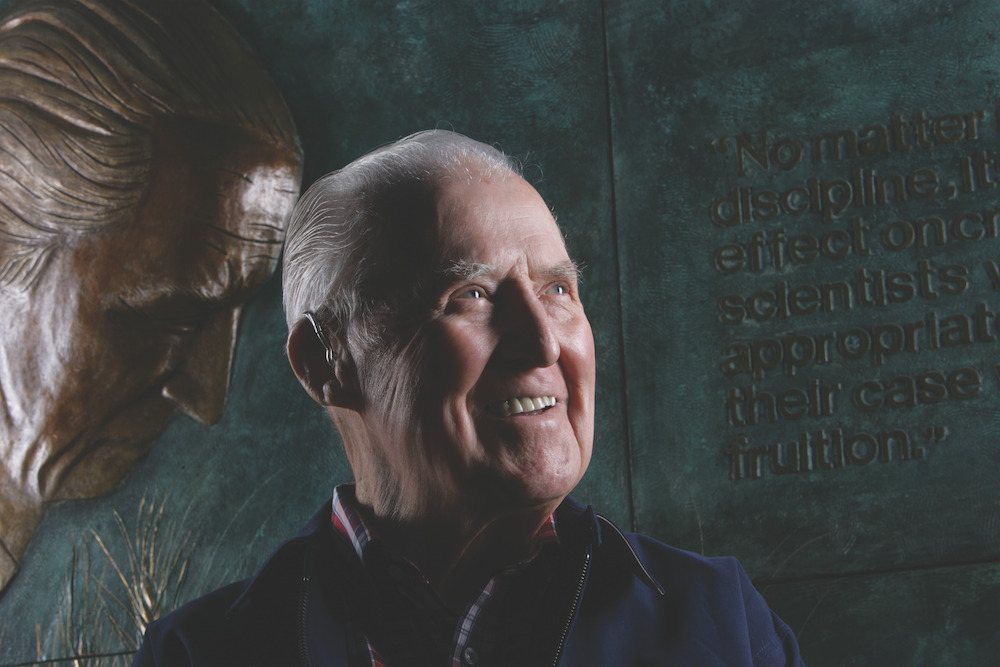
Dr. Norman E. Borlaug
Founder, the World Food Prize and 1970 Nobel Peace Prize Laureate
In 1970 Norman E. Borlaug was awarded the Nobel Peace Prize for a lifetime of work to feed a hungry world. Although a scientist with outstanding contributions, perhaps Dr. Borlaug’s greatest achievement has been his unending struggle to integrate the various streams of agricultural research into viable technologies and to convince political leaders to bring these advances to fruition.
Born of Norwegian descent, Dr. Borlaug was raised in Cresco, a small farming community in northeast Iowa. He learned his work ethic on a small mixed crop and livestock family farm and obtained initial education in a one-room rural school house.
Dr. Borlaug’s skills as an athlete (mainly in wrestling) opened the door for him to attend the University of Minnesota, where he studied to be a forester, wrestled, and worked various odd jobs. After graduating in 1937 with a BS in Forestry, he went to work for the United States Forest Service, initially in Idaho and later in Massachusetts and Connecticut. He returned to graduate school at the University of Minnesota, and took up the study of plant pathology, receiving his Ph.D. in 1942. Years later, the University of Minnesota would house its plant pathology and agronomy programs in Borlaug Hall.
After graduation, Dr. Borlaug worked as a Microbiologist for E.I. Dupont de Nemours, until being released from his wartime service.
In 1944, Dr. Borlaug participated in the Rockefeller Foundation’s pioneering technical assistance program in Mexico, where he was a research scientist in charge of wheat improvement. For the next sixteen years, he worked to solve a series of wheat production problems that were limiting wheat cultivation in Mexico and to help train a whole generation of young Mexican scientists.
Dr. Norman E. Borlaug
The work in Mexico not only had a profound impact on Dr. Borlaug’s life and philosophy of agriculture research and development, but also on agricultural production, first in Mexico and later in many parts of the world.
It was on the research stations and farmers’ fields of Mexico that Dr. Borlaug developed successive generations of wheat varieties with broad and stable disease resistance, broad adaptation to growing conditions across many degrees of latitude, and with exceedingly high yield potential.
These new wheat varieties and improved crop management practices transformed agricultural production in Mexico during the 1940’s and 1950’s and later in Asia and Latin America, sparking what today is known as the “Green Revolution.” Because of his achievements to prevent hunger, famine and misery around the world, it is said that Dr. Borlaug has “saved more lives than any other person who has ever lived.”
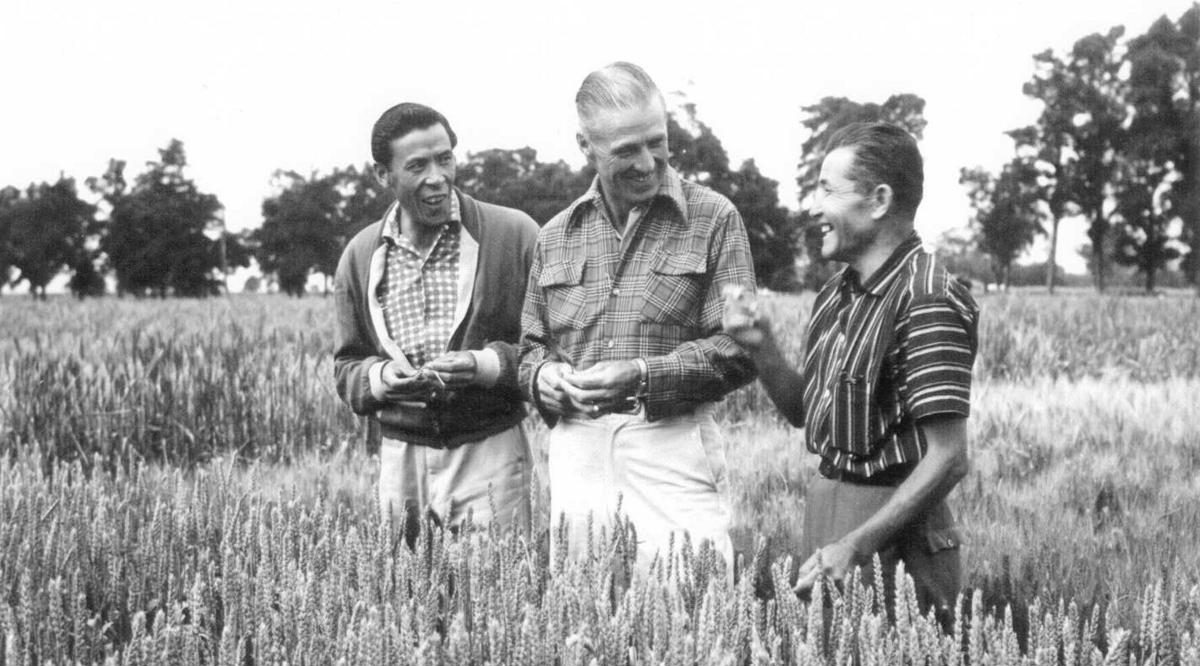
Dr. Norman E. Borlaug
Extended
Biography
Norman Borlaug’s approach to increasing global food production resulted in the saving of as many as 1 billion people worldwide from famine, starvation and death and earned him the title “Father of the Green Revolution.”
Since 1999, it has been my privilege to work directly with Dr. Norman Borlaug – comparing notes on our experiences in rural development, planning World Food Prize International Symposia, selecting young students for our International Internship Program and accompanying him to the 100th Anniversary of the Nobel Prize in Oslo. In the course of doing this, I have spent many fascinating hours talking to him about his life and career. It is a great story.
Named by TIME Magazine as one of the 100 most influential minds of the 20th century, Norman Borlaug is a quintessential American success story. Norm, as he is known to all who worked with him, was born in 1914 to Norwegian-American parents outside Cresco in the northeastern part of the American State of Iowa. His boyhood was spent on a Norman Rockwell-esque farm, where he had indelibly etched on his psyche the value of hard work, first inculcated by his family and later by his teachers and mentors.
His formal education began in a one-room schoolhouse. It was there that a young Norm Borlaug first learned the lesson that confronting the harsh realities of prairie farm life could bring disparate people together and impel them to cooperate. Each morning, Borlaug recalls, the Lutheran Norwegian children from Cresco and the Czech (Bohemian) Catholics from Spillville would stand and sing “The Iowa Corn Song,” celebrating their new identity and the bond they now shared as Iowans.
These immigrant children discovered in that small Iowa school that they had much in common, just as their parents found that working together to ensure sufficient food for all was more important than any ethnic or linguistic differences that might initially divide them. It was an insight that would remain with Borlaug throughout his life and would come to permeate his work.
Norman developed a dogged tenacity from participating in his high school wrestling program – another quality that would play a crucial role in some of his greatest achievements. His coach, Dave Bartelma, taught him never to give up, no matter how formidable his adversary. This attitude propelled Borlaug to the top of the inter-collegiate wrestling world and would later earn him induction in the NCAA Wrestling Hall of Fame.
Still another lesson Norman Borlaug absorbed was the critical importance of rural roads to spreading the word about the latest agricultural innovation and helping farmers get crops to market. Iowa was dramatically affected by the Great Depression, with foreclosures on family farms bringing displaced families close to insurrection. The network of farm-to-market roads being built all over the state not only facilitated agricultural production, but also the transport of children to school and access to medical care. The roads uplifted an entire generation of rural Iowans in a way almost nothing else could. Life improved and the specter of political unrest receded.
All of these factors came together in a way that steered Norman Borlaug to seek a university education, the first person in his family to do so. His initial thought was that he would study at Iowa State Teacher’s College and prepare for a career as a high school science teacher. This was a particularly arduous undertaking in the heart of the Great Depression. I recall that as we drove through Oslo in December, 2001 during the Nobel Anniversary, Norman recounted to me how, after graduating from high school, he labored for 50 cents a day as a hired farm hand to save enough to pay for a year of college. Eventually Norm had earned enough money, but made his way instead to the University of Minnesota where he would major in agricultural science, become an accomplished wrestler, meet his wife Margaret, and earn a Ph.D. in Plant Pathology.
To help pay his way through college, Borlaug worked in a coffee shop, served meals in a sorority house and parked cars. In the summer, thanks to his major in forestry, he obtained a job as a ranger with the U.S. Forestry Service stationed along the Salmon River in a remote part of the western state of Idaho and later in Western Massachusetts. He came to embrace the solitude of the forest and cared deeply about the plants and wildlife that was sustained in this habitat. His expectation was that upon graduation, he would become a full-time employee of the Forest Service.
However, fate intervened to redirect his life and to impact human history. As Norman told the story, just a few weeks before graduation, he received a letter from his supervisor in the U.S. Forest Service informing him that a tight budget situation meant that he could not start his new full-time Forest Ranger position for another six months. A disappointed Borlaug agreed to delay his arrival and decided to take some additional courses on the Minnesota campus. One day, he saw a notice on a bulletin board for a lecture by Dr. Elvin Stakman, the head of the university’s plant pathology department. Borlaug decided to attend.
Norman was riveted by Stakman’s lecture on rust – the parasitic fungus that attacked a wide variety of plants and trees. As Lennard Bickel wrote in his biography of Borlaug, “ . . . that night . . . Stakman was a magnetic and compelling teacher. His style, his sincerity, the intensity of his delivery made his words ring in Borlaug’s ears.”
Stakman ended his discourse with a moving charge that it was science which would “ . . . go further than has ever been possible to eradicate the miseries of hunger and starvation from this earth.” Norman Borlaug was hooked. He rushed to see Stakman to ask to be admitted to the Ph.D. program in plant pathology and gave up the possibility of a career in the Forest Service. It was a decision that would change his life, and save one billion people.
Graduating in the middle of World War II, Dr. Borlaug went to work for the DuPont Corporation. But he was soon approached about joining a fledgling research project being initiated by the Rockefeller Foundation in rural Mexico. After completing his obligatory wartime service at DuPont, he accepted the offer. There, he first saw the plight of poverty-stricken wheat farmers barely able to sustain themselves due to repeatedly poor harvests. Once again, Borlaug found a wide chasm to be bridged. There was an instinctive hesitation to adopt untried new technologies on the part of most subsistence farmers. And, there was an understandable reluctance to trust the word of an expatriate American college boy who didn’t even speak their language.
Borlaug admits to being extremely discouraged in this initial venture into the developing world. But his commitment to learn the language, a healthy dose of the determination he learned in high school sports, and his willingness to get his hands dirty working in the fields eventually enabled him to connect with some farmers who tried his new approach to wheat production. As Professor R. Douglas Hurt observed:
“In 1944, when Borlaug arrived in Mexico, its farmers raised less than half of the wheat necessary to meet the demands of the population. Rust perennially ruined or diminished the harvest. . . . Borlaug labored for 13 years before he and his team of agricultural scientists developed a disease resistant wheat. [But] still problems remained.”
While the new wheat variety he had developed increased yields and resisted rust, it did not have stems strong enough to hold the now heavy heads of grain. Plants would topple over in the wind and rain. Dr. Borlaug then turned to Japanese dwarf strains which he crossbred with the varieties being raised in the hot, dry climate of northern Mexico. To accelerate his research and the development of new varieties, using what a Wall Street Journal article called “shuttle breeding,” Borlaug and his team would rush seeds to southern Mexico where it was possible to carry out a second growing season each year.
The results were as astonishing as they had been difficult to attain.
Aided by the use of fertilizer and irrigation, Borlaug’s new wheat varieties enabled Mexico to achieve self-sufficiency in 1956. His belief in scientific research and a hands-on connection to the farmers paid off in what was considered an agricultural miracle.
These accomplishments on wheat plants were perhaps unexpected given Borlaug’s upbringing in the cornfields of Iowa. This anomaly was noted by Vice President Henry Wallace on a visit to CIMMYT in the 1940s, where he said jokingly to Dr. Borlaug, “What’s a good Iowa boy like you doing working on wheat?”
Inspired by his breakthrough achievements, the UN Food and Agriculture Organization and the Rockefeller Foundation asked Borlaug to turn his attention to the Middle East and South Asia. The problem of extreme poverty and failing harvests afflicted not only Mexico, but also much of the developing world, and was exacerbated by the post-war population explosion. As Indian agribusiness pioneer and World Food Prize Laureate Dr. B.R. Barwale noted, in the immediate aftermath of World War II, famine and the prospect of mass starvation haunted the Indian sub-continent and other parts of the globe. The great Bangladesh famine in the late 1940s seemed an ominous harbinger of pandemic starvation which would extract a devastating toll, adding to the more than 160 million people worldwide who had already died of famine or starvation during the previous 100 years.
But, much of the developing world was pulled back from the precipice of enormous human tragedy by the scientific pioneers who promulgated the Green Revolution. Leading them was Dr. Norman Borlaug, and the young agricultural scientists he had trained at the Centro Internacional de Mejoramiento de Maiz y Trigo – the International Maize and Wheat Improvement Center (CIMMYT) located outside Mexico City.
Having overcome great resistance by farmers in Mexico, Borlaug and his compatriots faced the seemingly impossible task of convincing the leaders of both India and Pakistan – two countries bitterly divided – to embrace an entirely new approach to agriculture. Borlaug recalled that going in to speak to these two most powerful political leaders required summoning the same amount of courage as when he stepped on the wrestling mat. But he went forward and presented the options available to the seniormost political leaders of both countries. With the support of Malik Khuda Bakhsh Bucka (then minister of agriculture in Pakistan) and C. Subermanium (then minister of agriculture and food of India) and young scientists like Dr. M.S. Swaminathan, both countries made the courageous decision to adopt Borlaug’s breakthrough technology. It arrived just in time to prevent a human catastrophe. By increasing crop yields in Pakistan and India fourfold, those traditionally food deficit countries became self-sufficient in an amazingly short time, saving hundreds of millions of lives.
Borlaug’s achievements in wheat spread throughout the Middle East and North Africa with similar life-saving results. Beginning in the early 1960’s, his approach to wheat breeding was introduced in Egypt, Tunisia, Syria, Iran, Libya, Jordan, Lebanon, Turkey, Iraq, Afghanistan, Algeria and Saudi Arabia, in many cases, through young scientists who had studied with him at CIMMYT. Just how significant an impact he had was brought home to me four decades later, while I was visiting with the Egyptian Minister of Agriculture in Cairo. When I mentioned Norman Borlaug’s name, the Minister immediately stopped the meeting and sent several aides rushing from the room. They returned a few minutes later with displays of robust wheat plants which the Minister proudly showed me. “We know Norman Borlaug very well,” the Minister declared, going on to point out how Borlaug’s innovations had helped transform agriculture in his country and throughout the region, to the benefit of millions upon millions of the citizens of all these countries.
Borlaug’s successes in wheat were quickly replicated in other grains, most notably rice, by scientists such as M.S. Swaminathan in India, and Robert Chandler, Henry “Hank” Beachell and Gurdev Khush at the International Rice Research Institute in the Philippines. Together, with countless others, they helped avert famine and starvation in much of the developing world in the second half of the 20th century.
I was a young development worker in the Mekong Delta in 1968 when this new “miracle rice” from the Philippines arrived. Its impact in the eight villages in which I worked was as stunning as it was immediate. The four villages that were accessible by road experienced dramatic improvements, both in terms of nutrition and the well being of the people. New IR-8 rice spread rapidly as peasant farmers with small plots were suddenly able to experience both increased yields and double crops. This in turn led to tangible improvements in the quality of life: child mortality dropped; malnutrition abated; and children, especially girls, stayed in school longer.
At the same time, there was a rapid corresponding decrease in the level of armed conflict and military hostilities. It was as though the combination of new roads and new rice seed caused the roots of violent extremism to wither and disappear in a way that military action alone could not. By contrast, the four other villages, with no bridges and no road access, remained mired in poverty: the new “miracle seeds” were not put to use; children remained stunted; and warfare and political dissidence continued there unabated.
This experience seemed to confirm one of the central lessons of Norman Borlaug’s boyhood – the ability of agricultural innovation and rural roads to dramatically change social conditions.
Dr. Norman Borlaug was presented the Nobel Peace Prize in 1970 for his accomplishments in India and Pakistan and for his role as “Father of the Green Revolution.” It is indicative of the kind of person he is that when, on October 20, 1970, the phone call came to advise him of his selection as the Laureate, Norman was in a remote farm field in Mexico. Margaret Borlaug had to drive for over an hour to tell him the news and ask him to return home to respond to the calls, and the concomitant press requests for interviews. Lennard Bickel, in his 1974 biography of Borlaug, Facing Starvation, describes Norman’s reaction: He told Margaret that he didn’t see how he could possibly come to speak on the phone since he and his assistants still had much more work to do. He then went back to recording data on his test plots. It was there that the TV camera crews found him two hours later.
In a sense, when Borlaug received the Peace Prize on December 10, 1970, his life had come full circle. Here he was, the son of immigrants who had left Norway due to extreme food shortages, now, back in their country of origin to receive one of the world’s highest honors for his role in increasing the world’s food supply. As he stood in the great hall of the University of Oslo, Borlaug was lauded as an “indomitable man who fought rust and red tape . . . [and] who more than any other single man of our age, has provided bread for the hungry world.”
Borlaug remains the only agricultural scientist ever to receive the Nobel Peace Prize, and one of its least known recipients. I recall reflecting as he sat among many other laureates for the 100th Anniversary “class picture,” that it was ironic that his name would be so little recognized, since compared to the other, more celebrated honorees, he had probably saved more lives than all of them put together.
In his laureate address, Borlaug stressed that the agricultural breakthrough achievements for which he was being honored were only providing a brief window of time during which the world must confront the specter of a burgeoning world population which would have to be fed. As a result, Dr. Borlaug’s efforts did not cease or even slow after this recognition by the Nobel Foundation. While many individuals might consider retiring after receiving such recognition, Dr. Borlaug has worked even harder in the four decades since his selection as the Peace Prize Laureate in the struggle against world hunger and malnutrition. Even in his tenth decade of life, Dr. Borlaug has kept a heavy travel schedule, pressing forward with projects in Africa, passionately advocating the primacy of science and technology in improving global food security, devoting significant time and energy to education and promoting biotechnology as a way to preserve the environment.
Among Dr. Borlaug’s greatest accomplishments since his selection as a Nobel Peace Prize Laureate are:
- His leadership with former President (and fellow Nobel Peace Prize Laureate) Jimmy Carter and The Carter Center, of The Sasakawa Global 2000 Program, which has promoted the production of Quality Protein Maize in sub-Saharan Africa, countering Marasmus and Kwashiorkor, and other forms of acute malnutrition for millions of at-risk children;
- The founding of the World Food Prize which exists to recognize and inspire Nobel-like achievements in food and agriculture;
- His 30-year relationship with China as that country’s agriculture was transformed, and;
- His prodigious efforts to educate the next generation of students and leaders on the crucial importance of world hunger and food security.
From its founding in 1986, Dr. Borlaug headed the Sasakawa Africa Association, whose programs aim at defeating malnutrition and poverty in Africa. Its activities center on bringing science-based crop production methods to the small farms of sub-Saharan Africa. Proven agricultural technology is the key to overcoming widespread food shortages that condemn millions of people in Africa to lives of hardship and hunger.
Part of the Sasakawa Global 2000 endeavor, Sasakawa Africa projects have been implemented in a dozen African countries. In addition to its partnerships with ministries of agriculture, the Sasakawa Africa Association has collaborated with NGOs, businesses, and international development agencies. Perhaps the most significant achievement of this effort is the successful development of highly nutritious corn – known as Quality Protein Maize – which offers great promise in preventing acute malnutrition among children in Ghana, Mozambique, and other African countries, as well as in Mexico. Perfected by a longtime Borlaug protégé at the Maize and Wheat Improvement Center in Mexico, Dr. Borlaug and the Sasakawa Africa Association have helped spread this life-saving food into villages with immediate effect – enhancing and saving the lives of thousands and thousands of children.
One of Dr. Borlaug’s most lasting contributions may be the creation of the World Food Prize. Norman often said that he believed he was nominated for the Nobel Peace Prize because there is no Nobel Prize for agriculture or efforts to counter poverty and hunger. Laureate Borlaug felt there should be, so shortly after receiving the Peace Prize, he approached the Nobel Committee urging the creation of a new Nobel Prize for Agriculture. But it was not possible. Not even Borlaugian grit and determination could change Alfred Nobel’s will. Undeterred, Norman set out to create just such an honor. In 1986, with the assistance of Carleton Smith and the support of the General Foods Corporation, he established a new award to recognize exceptional achievement – the World Food Prize.
The Prize of $250,000 is now endowed by philanthropist and businessman John Ruan, himself with origins in a small Iowa town just like Borlaug. Ruan “rescued” The Prize when General Foods withdrew its sponsorship in 1989. He moved it to Des Moines, Iowa, Borlaug’s native state, and established a foundation with a bi-partisan Council of Advisors, including: the late Philippine President Corazon Aquino; former U.S. Presidents Jimmy Carter and George Bush; and The Honorable Olusegun Obasanjo, former President of Nigeria.
During his time as Chairman, John Ruan stressed that he took this action because The Prize is now even more vital to inspiring a second Green Revolution that is necessary to prevent the possibility of future food crises. “Right now, close to one billion people still suffer from malnutrition, nearly one-sixth of the world population, primarily women and children, infants and the unborn,” Ruan pointed out.
The World Food Prize is awarded on or near World Food Day each year in the Iowa State Capitol Building. John Ruan served as Chairman of The World Food Prize Foundation until 2003. Today his son, John Ruan III, serves as Chairman.
In addition to the Laureate Award Ceremony, the World Food Prize holds an International Symposium and a Global Youth Institute each October to foster a dialogue on world hunger and related issues. The symposium, known as “The Borlaug Dialogue,” brings over 1100 people from more than 65 countries to Des Moines each October for what organizers call “the most significant observance of World Food Day anywhere around the globe.” Symposium topics have focused on the threat of agro-terrorism, the coming global water crisis, the dual global challenges of obesity and malnutrition, and the global impact of biofuels.
The World Food Prize has honored those who have made the most significant contributions to improving the quality, quantity and availability of food. Swaminathan, Barwale, Beachell, Khush and Chandler all eventually became World Food Prize Laureates. Other recipients of The Prize include experts and scientists from Brazil, China, Cuba, Denmark, Ethiopia, Ghana, Israel, India, Mexico, the Netherlands, Sierra Leone, Switzerland, the United Kingdom, United Nations and the United States.
One of the World Food Prize Laureates was He Kang, the former Chinese Minister of Agriculture who was honored in 1993 for implementing the policies that moved China to self-sufficiency in grain, in a remarkably short period of time. Minister He and many of the agricultural scientists in China looked to Dr. Borlaug as an “old friend” who provided them significant assistance along this road to success. Borlaug’s spring wheats went to China, via Pakistan, during the late 1960s. They were crossed with Chinese wheats, as well as directly selected for use. Borlaug himself led the way in establishing connections between China and the West. He started going to China in 1974, one of the first scientists from the West to begin visiting there. He was there again in 1977 and at various times during the 1980s and 1990s. He traveled extensively in the country, initially to wheat-growing areas, and over time to maize and other agricultural areas, talking with farmers and urging adoption of approaches he developed. During these visits, Borlaug saw the tremendous improvements that took place following the collapse of the Cultural Revolution, particularly beginning in the watershed year of 1978. Borlaug often traced this success to the changes in Chinese nutrient management strategies, moving from a reliance on organic recycling of manure, through the building of small-scale plants and imports, to Chou en Lai’s authorization of the purchase of multiple large-scale nitrogen plants.
Reflecting the friendship and spirit of cooperation he has always demonstrated in his relationship with Chinese scientists and policymakers, Norman Borlaug was made an honorary member of the Chinese Academy of Agricultural Sciences in 1994.
Dr. Borlaug has was committed to youth activities and education throughout his career. While pursuing breakthroughs in plant science in Mexico, he served as Scoutmaster for his local Boy Scout Troop, and as coach of the first Mexican Little League baseball team. He continued to devote himself to passing on to the next generation his passion for science and education as the means to uplift people mired in poverty. Thus, in between attending conferences and giving lectures around the world, he taught at Texas A&M University, where he held a post as a Distinguished Professor in the Department of Soil and Crop Sciences.
To promote interest in global food security, in partnership with John Ruan, he created The World Food Prize Youth Institute, which is held in conjunction with The World Food Prize International Symposium each October in Des Moines. There, high school age students interact with Dr. Borlaug, World Food Prize Laureates and other experts to discuss the potential solutions to world hunger and the roles they, the leaders of tomorrow, might play in making them a reality. In 1994 its first year, the Youth Institute had 13 schools represented. A decade later, close to 100 students and 100 teachers were attending each year.
Under Dr. Borlaug’s direction, the Youth Institute developed an International Internship program which annually sends two dozen or more exceptional high school students on eight-week summer internships to international agricultural research centers located in Asia, Africa, and South America. He wanted these young people to have that same type of life-altering experience that he had when he heard Elvin Stakman speak on that cold Minnesota night in 1937.
When speaking to young people in the early years of the 21st Century, Borlaug often quoted Thomas Jefferson as rhetorically asking whether:
“Ease and security – were these the drugs that abated the eternal challenge of the minds of men?…Did nations like men become lethargic when well fed and bodily comfortable?”
It is clear that Borlaug worried that this may be the case, particularly as almost all young Americans are physically removed from farming, and the connection between our food supply and agriculture production is no longer so clearly understood. But, no doubt he took heart when some of the students returning from their eight week World Food Prize International Internships volunteer that coming face to face with third world poverty was a “life-changing experience,” perhaps not unlike Borlaug’s own epiphany when as a college student he listened to his mentor Elvin Stakman.
Exhibiting the virtues he learned growing up, Norman Borlaug continued almost to the very end of his life to travel the world to promote greater attention to, and investment in, rural infrastructure (particularly roads and bridges), agricultural research, and education. Norman believed all these are essential if we are to have the next “Green Revolution,” – the one which will lift the remaining one billion people out of the misery of malnutrition and end pandemic poverty.
In his speeches he advocated biotechnology and the crucial role he saw for it in feeding and enhancing the nutrition of those still in tenuous food security situations, particularly in Africa. His dream was that a scientist would discover the gene in the rice plant that prevents it from developing rust disease, and transplant it into wheat and other crops devastated by this scourge.
Genetically modified crops are controversial, but, never one to back away from a confrontation, Borlaug argued that we must rely on science and research to answer the questions about whether GMO foods pose any environmental risks. At the same time, he stressed that what is needed is not just miracle seeds and other agricultural inputs, but also the educational facilities to uplift the young and logistical infrastructure (like roads and railroads) to make Africa prosper.
He lamented the declining trend in support for public agricultural research, such as at CIMMYT in Mexico, where the crucial discoveries that led to the first Green Revolution took place. In June 2002, he and all the living World Food Prize Laureates issued a statement at the World Food Summit in Rome calling for a reversal of this trend.
And when he concluded his remarks in his speeches, something of the old forester came to the fore. Borlaug pointed out that with the earth’s population increasing exponentially, all these new people can be fed in only one of two ways. Either we significantly increase yields on the land now in production, or we plow under the remaining rainforests and other habitats for wild plants and animals in order to have more land to farm. Biotechnology, he stressed, will help preserve the ecosystem while also reducing hunger and malnutrition, by providing these increased yields. In that way, he once told a group of Iowa high school students, he may be saving more trees as a plant pathologist than he even would have as a forest ranger.
But, I believe Norman Borlaug’s message may be just as relevant for those who seek to counter terrorism and bring a lasting peace in the Middle East and South Asia. Just as I saw the first “Green Revolution” evaporate political and military hostility more than 30 years ago in the Mekong Delta, it just may be that a “New Green Revolution” (and the roads to make it happen) represents one of the most potent forces available to this generation to dissipate the sources of terrorism – which breed and are sustained in the poorest parts of the world, such as Afghanistan and Somalia.
A dialogue on cutting-edge topics in food, agriculture, and nutrition occurs each year at the Norman E. Borlaug International Dialogue, known as the Borlaug Dialogue. The symposium, an integral program of the World Food Prize Foundation which Dr. Borlaug founded in 1986, hosts speakers from around the globe. Past topics include agroterrorism, the dual challenges of obesity and malnutrition, and the impending global water crisis.
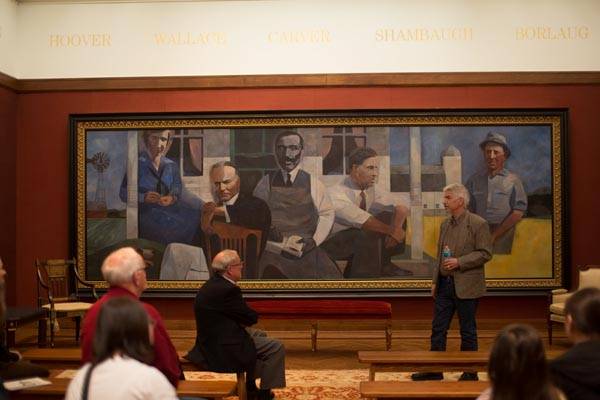
The Norman E. Borlaug Hall of Laureates is the home of the World Food Prize and also serves as a museum to honor the life-saving achievements of Dr. Borlaug, the World Food Prize Laureates and Iowans such as Herbert Hoover, Henry Wallace and George Washington Carver. The Hall of Laureates is host to many activities intended to educate and inspire those involved in the fight against hunger, including the Iowa Hunger Summit and World Food Prize Youth Institute. These and other efforts by the World Food Prize strive to ensure Dr. Borlaug’s legacy of feeding the world will live in perpetuity.
As the person who has probably saved more lives in the Islamic world than anyone who has ever lived, it would be only fitting if Norman Borlaug’s 20th century message of using seeds and roads to reach across political, ethnic, and religious chasms to uplift hungry, suffering people would be the vehicle that brought peace and reconciliation to a deeply troubled and divided 21st century world.
Life:
March 25, 1914 – September 12, 2009
Place of Birth:
Cresco, Iowa, USA
Family:
- Wife: Margaret Gibson (1911-2007)
- Children: Norma Jean (Laube) and William G.
Education:
- B.S. Forestry, University of Minnesota, 1937
- M.S. Plant Pathology, University of Minnesota, 1940
- Ph.D. Plant Pathology, University of Minnesota, 1942
Employment Record:
- The U. S. Forest Service, 1935-38
- Instructor, University of Minnesota, 1941
- Microbiologist, E. I. DuPont de Nemours, 1942-44
- Research Scientist in charge Wheat Improvement in Cooperative Mexican Agricultural Program (O.E.E.), a joint dependency of Mexican Ministry of Agriculture and Rockefeller Foundation, 1944-1960
- Associate Director, Rockefeller Foundation, assigned to Inter-American Food Crop Program, 1960-63; to CIMMYT, 1964-1982
- Consultant and collaborator to Instituto Nacional de Investigaciones Agricolas (I.N.I.A.), Mexican Ministry of Agriculture, 1960-64
- Consultant Food and Agriculture Organization of U.N. (F.A.O.) in North Africa and Asia, 1960
- Director of Wheat Research and Production Program, International Maize and Wheat Improvement Center, (CIMMYT), 1964-79; Acting Director, 1981
- Ex-Officio Consultant on Wheat Research and Production Problems to many Governments in Latin America, Africa and Asia, 1960-Senior Consultant to CIMMYT, 1979 -Honorary Visiting Professor of the University of Minnesota (USA), 1980The A. D. White Professor-at-Large Distinguished Professorship, Cornell University (USA), 1983-85
- Distinguished Professor of International Agriculture, Department of Soil & Crop Sciences, Texas A&M University, College Station, Texas (USA), 1984-2009
- Adjunct Professor in the Department of Biology, Emory University, Atlanta, Georgia (USA), 1991-1992
- President of Sasakawa Africa Association, 1986-
- Senior Consultant to Director General of CIMMYT 1980-2009
Memberships in Learned Societies:
Member – Alpha Zeta, Xi Sigma Pi, Sigma Xi
Honorary Degrees:
Doctor of Science:
- Punjab Agricultural University (India), 1969
- Royal Norwegian Agricultural College (Norway), 1970
- Luther College (USA), 1970
- Kanpur University (India), 1970
- Uttar Pradesh Agricultural University (India), 1971
- Michigan State University (USA), 1971
- Universidad de la Plata (Argentina), 1971
- University of Arizona (USA), 1972
- University of Florida (USA), 1973
- Universidad Católica de Chile (Chile), 1974
- Universität Hohenheim (Germany), 1976
- Punjab Agricultural University, (Pakistan), 1978
- Columbia University, (USA), 1980
- Ohio State University (USA), 1981
- University of Minnesota (USA), 1982
- University of Notre Dame (USA), 1987
- Oregon State University (USA), 1988
- University of Tulsa (USA), 1991
- Washington State University (USA) 1995
- Andhra Pradesh Agricultural University (India), 1996
- Indian Agricultural Research Institute (India), 1996
- De Montfort University, (United Kingdom), 1997
- Emory University, (USA) 1999
- University of the Philippines, 1999
- University of Missouri, (USA), 2002
- Williams College, (USA), 2002
- Wartburg College (USA), 2003
- Dartmouth College (USA), 2005
- North Dakota, Weslyan (USA), 2008
Doctor of Agricultural Sciences:
- University of Agricultural Sciences (Godollo, Hungary), 1980
- Tokyo University of Agriculture (Japan), 1981
- Doctor en Ciencias Agropecuarias Honoris Causa, Universidad Nacional Pedro Henríquez Turena, República Dominicana, 1983
- Doctor en Ciencias, Honoris Causa Universidad Central del Este de la República Dominicana, 1983
Doctor Humane Letters:
- Gustavus Adolphus College (USA), 1971
- Iowa State University (USA), 1992
- Cape Coast University (Ghana), 2000
- Texas A&M University (USA), 2007
Doctor of Law:
New Mexico State University (USA), 1973
Doctor of Agriculture:
- Tufts University (USA), 1982
- Doctor Honoris Causa:
- Universidad Mayor de San Simón (Bolivia), 1983
- Universidad de Buenos Aires (Argentina), 1983
- Universidad de Cordoba (Spain), 1986
- Universidad Politécnica de Catalunya (Barcelona, Spain), 1986
- Colegio de Postgraduados (Montecillo, Mexico), 1990
- Universitá degli Studi di Bologna (Italy), 1991
- Warsaw Agricultural University (Poland), 1993
- Bangladesh Agricultural University, 1998
- Universidad LaSalle-Noroeste (Mexico), 1999
- Universidad Politécnica de Madrid, (Spain), 2000
- Universidad de las Américas Puebla (Mexico), 2000
- Universidad Autónoma de Nuevo León (Mexico), 2001
- Universidad Autónoma de Chapingo (Mexico), 2001
- University Chandra Shekhar Azad Krishi Evam Prodyoogic Vishwavid Yalaya
- (Kanpur, India), 2001
- Texas A&M University’s First Lifetime Achievement Award, (USA), 2004 (awarded to university professors in lieu of an honorary degree)
- Universidad de Granada (Spain), 2005
Other Academic, Scientific and Achievement Awards:
- The Outstanding Achievement Award, University of Minnesota (USA), 1959
- Elvin Charles Stakman Award, University of Minnesota (USA), 1961
- University of Minnesota “M” (Athletic) Club Outstanding Achievement Award (USA), 1971
- Award as Founding Member, the Instituto Nacional de Investigaciones Agrícolas, Secretaría de Agricultura y Ganadería (México) 1964
- Recognition Award of Agricultural Institute of Canada, 1966
- Recognition Award, Instituto Nacional de Tecnología Agropecuaria de Marcos Juárez (Argentina), 1968
- Honorary Fellow, Indian Society of Genetics and Plant Breeding (India), 1968
- First International Service Award in Agronomy, American Society of Agronomy (U.S.A), 1968
- Meritorious Service Award and Honorary Life Membership, American Association of Cereal Chemists (USA), 1969
- Uncle of Paul Bunyan (Forestry), University of Minnesota (USA), 1969
- Scientific Service Award, El Colegio de Ingenieros Agrónomos de México (México), 1970
- Diploma de Mérito, El Instituto Tecnológico y de Estudios Superiores de Monterrey (México), 1971
- Medalla y Diploma de Mérito “Antonio Narro” de la Escuela Superior de Agricultura de la Universidad de Coahuila (México), 1971
- Diploma as Distinguished Geneticist, Sociedad Mexicana de Fitogenética (México), 1971
- First Honorary Life Membership, American Society of Agronomy, Crop Science (USA), 1971
- Honorary Member, Sociedad de Agronomía do Rio Grande do Sul (Brazil), 1971
- Merit Award, Associacao dos Engenheiros Agronomos do Distrito Federal do Brasil (Brazil), 1971
- Recognition Award, Punjab Agricultural Research Institute (Pakistan), 1971
- Medal, Consultor Emeritos, Instituto Nacional de Tecnología Agropecuaria (Argentina), 1971
- Diploma de Mérito, Escuela Superior de Agricultura “Hermanos Escobar” (México), 1973
- Centennial Foreign Fellow, American Chemical Society (USA), 1976
- Lecturer, American Graduate School of International Management (USA), 1977, 1979, 1991
- First Honorary Life Membership, Bangladesh Botanical Society, 1978
- First Honorary Membership, Bangladesh Association for the Advancement of Science (Bangladesh), 1978
- Jefferson Award, American Institute for Public Service (USA), 1980
- Agricultural Hall of Fame and Distinguished Service Award, Oregon State University, (USA), 1981
- Honorary Member, Japan Society Promotion of Science (Japan), 1981
- Fellow, Crop Science Society of America, 1985
- Presidential Award, Crop Science Society of America, 1997
- Honorary Professor, China Agricultural University, 1999
- Appointed As Foreign Expert on Science and Technology to China National Center for Biotechnology Development (CNCBD), 1999
- Honorary Member, Ingenieros Agrónomos del Centro y Canarias (Spain), 1999
- National Award for Service to American and World Agriculture, National Association of County Agricultural Agents (USA), 1999
- Mazorca de Oro (Golden Ear of Maize), Escuela Nacional de Agricultura Roberto Quiñones, (El Salvador), 1999
- Public Welfare Medal, National Academy of Sciences, (USA), 2002
- The Philip Hauge Abelson Prize, American Association for the Advancement of Science, ((USA), 2002
- State of Iowa Established October 16th as Dr. Norman E. Borlaug World Food Prize Day, 2002
- Award for Distinguished Achievements to Science and Medicine, American Council of Science and Health, (USA), 2003
- New York Athletic Club Fila Life-Time Achievement Award (Fila-International Federation of Associated Wrestling), (USA), 2003
- John P. McGovern Award and Lectureship (Sigma Xi), (USA), 2003
- Wittenberg Award, Luther Institute, USA 2004
- State of Minnesota Designated October 16th as Dr. Norman E. Borlaug World Food Prize Day, 2004
- U.S. Senate Resolution Making October 16th World Food Prize Day in America in honor of Dr Norman E. Borlaug, (USA), 2004
- Establishment of Norman E. Borlaug International Science and Technology Fellows Program (USDA and US AID sponsored), 2004
- Presented Inaugural George C. Marshall Lecture (sponsored by US AID)
- The Dr. Martin Luther King Jr.—International Brotherhood Award, from Congress of Racial Equality (CORE), 2005
- Honorary Fellow,American Institute for Medical and Biological Engineering, 2005
- Danforth Award for Plant Science, (Donald Danforth Plance Science Center (USA), 2005
Government and Civic Awards:
- Distinguished Service Awards, Producer Associations and State Governments from the Mexican States of Guanajuato, Querétaro, Sonora, Tlaxcala and Zacatecas (México), 1954-60
- First “Golden Spike of Wheat Award” (Sonora, México), 1962
- Distinguished Citizen Award, Cresco, Iowa (USA), Cresco Centennial Committee, 1966
- The 1967 National Distinguished Service Award, American Agricultural Editors Association (USA)
- Sitara-I-Imtiaz (Star of Distinction), Government of Pakistan, 1968
- The 1968 Genetics and Plant Breeding Award, National Council of Commercial Plant Breeders (USA)
- Citation and street named in his honor by Citizens of the State of Sonora, and City and Rotary Club of Ciudad Obregón, Sonora (México), 1968
- Distinguished Service Award by Wheat Farmers of the States of Punjab, Haryana and Himachal Pradesh (India), 1969
- The 1969 Man of the Year, Independent Television of Britain (UK)
- Nobel Prize for Peace, 1970
- Cresco’s Norman Borlaug Recognition Day, Chamber of Commerce of Cresco, Iowa, 1970
- Iowan of the Year, Iowa Broadcasters Association, 1970
- Aztec Eagle, Government of México, 1970
- Governor’s Distinguished Service Award, State of Iowa, 1970
- Professional Achievement Award, Sons of Norway (USA), 1970
- Outstanding Services Award and Proclamation of Norman E. Borlaug Day, State of Minnesota Governor’s March 2, 1971
- Honorary Citizen of Minneapolis (USA), 1971
- Service Award, Minnesota Wrestling Coaches Association (USA), 1971
- Dedication of a Sequoia gigantea in the Rotary Club Peace Grove, Berkeley, California (USA), 1971
- The 1971 Gold Plate Award, American Academy of Achievement (USA), 1971
- Service Award, by Farmers, Ejidatarios and Scientists of Coahuila and Durango (México), 1971
- Honorary Membership in Rotary Clubs in Ciudad Obregón (México), Balcarce and Marcos Juárez (Argentina), 1971
- Borlaug Statue Dedicated Beadle Park, Chamber of Commerce, Cresco, Iowa, (USA), 1971
- Dedication Primary School “Norman E. Borlaug”, Secretaría de Educación Pública (México), 1971
- Award for Service to Agriculture, American Farm Bureau Federation, 1971 (USA)
- Outstanding Agricultural Achievement Award,World Farm Foundation (USA), 1971
- Medal of Merit, Fiesta Nacional de Trigo (Argentina), 1971
- Service Medal, Bolsa de Cereales de Buenos Aires (Argentina), 1971
- Service Medal and Golden Spike, San Gerónimo (Argentina), 1971
- Medal of Merit, State of Santa Fe (Argentina), 1971
- Medal of Merit, Citizens and Government of Balcarce (Argentina), 1971
- Medal of Merit, Faculty of Agronomy, Universidad de la Plata (Argentina), 1971
- Honorary American Farmer Degree and Key, Future Farmers of America,
- (USA), 1971
- Honorary Consultant to Punjab Agricultural University of Lyallpur
- (Pakistan), 1971
- Outstanding Achievement Award, Minneapolis Chamber of Commerce
- (USA), 1971
- Achievement Award for Contribution to World Wheat Production, National Association of Wheat Growers of USA, 1971
- The 1971 World Citizenship Award, by Des Moines Chamber of
- Commerce, (USA)
- Outstanding Professional Achievement Award, Gopher Peavy of College Forestry, University of Minnesota, (USA), 1971
- Medal of Merit, Italian Wheat Scientists, 1971
- Achievement Award and Honorary Citizen of Cedar Falls, Iowa (USA), 1972
- Service Award for Outstanding Contribution to the Alleviation of World Hunger, Eighth Latin American Food Production Conference (Brazil), 1972
- Medal of Merit, Gremial Nacional de Trigueros de Guatemala, 1973
- Recipient First Medical Medal of Merit and Bestowal of Knighthood, by Knights of Malta (USA), 1973
- Award Bernardo O’Higgins bestowed by Government of Chile, 1974
- Presidential Medal of Freedom (USA), 1977
- America’s Third Century Achievers Award in the Field of Agriculture, Samsonite Corporation (USA), 1977
- The Iowa Award, (The Eight Recipient), State of Iowa (USA), 1978
- The 11th Fanny Harris Hartman Fellow, The Hockaday School, Texas
- (USA), 1978
- The Hilal-I-Imtiaz Award (The Crescent of Distinction), Government of
- Pakistan, 1978
- Achievement Award for Contributions to World Food Production, International Association Phosphate Industries (I.S.M.A.) and Association of Fertilizer Industries of Latin American (A.D.I.F.A.L.) (México), 1978
- V Premio Internazionale, Associazione Nazionale Stampa Agricola (Italy), 1978″
- Adventures in Agricultural Science Award of Distinction, The IX International Congress of Plant Protection and United States Department of Agriculture (USA), 1979
- Appreciation Award for Thirty-Five Years of Dedicated Effective Service to International Agriculture and the Well-Being of Mankind Throughout the World. The Trustees and Staff of the Rockefeller Foundation (USA), 1983
- Recognition for Sustained Service to Humanity Through Outstanding Contributions in Plant Breeding Award, Governors Conference on Agriculture Innovations, Little Rock, Arkansas (USA), 1984
- Henry G. Bennet Distinguished Service Award, Oklahoma State University, (USA), 1984
- Paul Harris Fellow, by Rotary Foundation of Rotary International, 1985
- Premio de Servicio Orden de Cristo, (Portugal), 1986
- President’s Council of Advisors on Science and Technology (PCAST) (USA), 1990-1993.
- Honorary Rector of the University of Dubuque (USA), 1992-93
- Department of State’s Certificate of Appreciation, (USA), 1997
- The Sowers Award, Rural Ministers of Evangelican Lutheran Church in America, 1999
- Recognition Award for Contributions to World Wheat and Maize Research and Production, Republic of El Salvador, 1999
- Dedication Norman E. Borlaug Center for Southern Crop Improvement, Texas A&M University, 1999
- Memorial Centennial Medal of the N. I. Vavilov Research Institute of Plant Industry (Russia) 2000
- The Prometheus Award for Human Achievement from the Competitive Enterprise Institute, 2004
- Inaugural Lecture of The George C. Marshall Distinguished Lecture Series on International Development, sponsored by US Agency for International Development (USAID), 2004
- F.T. Achievement Award for Courageous Leadership in Introducing High Yield Agricultural Technology to Feed People in Many Developing Countries, from F.T. Pesquiza e Sementes, Parana, Brazil, 2004
- Recognition Award-Contributions to Triticultura, Parana, ENSE, Brazil, 2004
- Norman E. Borlaug International Science and Technology Fellows Program—sponsored by US Department of Agriculture to support technological progress in the Developing World, March 29, 2004
- National Medal of Science, USA, 2005
- Padma Vibhushan, Government of India, 2006
- International Quality of Life Award, Auburn University (USA), 2006
- Congressional Gold Medal, USA, 2006
Academies of Sciences:
- National Academy of Sciences of USA, 1968
- Foreign Member, The Royal Swedish Academy of Agriculture and Forestry, 1971
- Honorary Academician, Academia Nacional de Agronomía y Veterinaria de Argentina, 1971
- Honorary Foreign Academician of N. I. Vavilov Academy of Agricultural Sciences of the Lenin Order (USSR), 1971
- Foreign Member, Indian National Science Academy (India), 1973
- Distinguished Fellow, Iowa Academy of Sciences (USA), 1975
- Fellow, The American Academy of Arts & Sciences (USA), 1976-
- Honorary Member, Royal Society of Edinburgh (UK), 1976
- Honorary Member, Royal Agricultural Society of England (UK), 1976
- Foreign Member, Bangladesh Academy of Sciences (Bangladesh), 1978
- Honorary Member, Hungarian Academy of Science (Hungary), 1980
- Foreign Honorary Member, Pakistan Academy of Sciences (Pakistan), 1984
- Member, Third World Academy of Sciences, 1985
- Foreign Member, Royal Society (London), 1987
- Foreign Member, Polish Academy of Sciences, 1988
- Honorary Member, The Norwegian Academy of Science and Letters, 1988
- Honorary Professor, Chinese Academy of Agricultural Sciences, 1994
- Honorary Member, Mexican Academy of Sciences, 1994
- Honorary Member, Agricultural and Forestry Sciences “Gheorghe Ionescu-Sisesti”, (Romania), 1994
- Foreign Member, Chinese Academy of Engineering, 1996
- Honored Professor, Academy of Sciences of the Republic of Kazakhstan, 1998
- Full Member (Academician), Academy of Agricultural Sciences of the Republic of Kazakhstan, 1998
- Honorary Member, Brazilian Academy of Sciences, 2003
- Honorary Member, Romanian Academy, 2009
Citizens Organizations:
- Director, Population Crisis Committee, (USA), 1971-
- Asesor Especial, Fundación para Estudios de La Población, A. C. (México), 1971
- Member, Council for Agricultural Science and Technology (CAST) (USA), 1973-
- Member, Advisory Council of Renewable Natural Resources Foundation
- (USA), 1973
- Member, Citizen’s Commission on Science, Law and Food Supply (USA), 1973-74
- Member, Commission on Critical Choices for Americans (USA), 1973-74
- Board of Trustees, International Food Policy Research Institute (I.F.P.R.I.) (USA), 1976-82
- Member, Presidential Commission on World Hunger (USA), 1978-79
- Board of Directors, American Council on Science and Health (USA), 1978-
- Advisor, The Population Institute (USA), 1978
- Board of Trustees, Winrock International (U.S.A.), 1982-1990
- Director, Population Communications International (USA), 1985-94
- Founder and Chairman of the Selection Committee, The World Food Prize 1986-
- President, Council of The Foundation for the Development of Polish Agriculture, 1988-1993
- Board of Trustees , Pan-American School of Agriculture “Zamorano” (Honduras), 1992-1997
- International Advisory Counsel, Population Communications International, 1995
Other Honors:
- George Brown Award, CRDF Global, 2010
- Inaugural Lecturer, Leonard Klinck Memorial Lecture (Canada), 1965
- McDougal Memorial Lecturer (F.A.O.), 1971
- Rockefeller Foundation Appreciation Award for 35 Years of Tireless Service as Plant Breeder and Ambassador Extraordinary to the Wellbeing of Mankind Throughout the World-From Trustees and Staff of the Rockefeller Foundation, December, 1979
- Inaugural Lecturer and Medal Recipient of the Dr. Sterling B. Hendrick’s Memorial Lectureship (USA), 1981
- National Award for Agricultural Excellence (in Science) National Agri-Marketing Association (USA), 1982
- Distinguished Achievement Award in Food and Agricultural Sciences, Council for Agricultural Science and Technology, (USA), 1982
- Honorary Citizen of the State of Sonora (Mexico), 1983
- The A.D. White Professor-at-Large Distinguished Professor, Cornell University, (USA), 1983-85
- Life Fellow of the Rockefeller Foundation (USA), 1983
- Profesor Honorario, Facultad de Ciencias Agronómicas y Veterinarias, Universidad Autónoma de Santo Domingo (República Dominicana), 1983
- Chief Guest, Awards Ceremonies of the Jamnalal Bajaj Foundation (Bombay, India), 1983
- Inauguration of the Norman E. Borlaug Centro de Capacitación y Formación de Agricultores, Corporación Gestora del Proyecto “Abapó-Izozog”, Santa Cruz (Bolivia), 1983
- Appointment as “Miembro Corresponsal”, Consejo Argentino para las Relaciones Internacionales, 1983
- Honorary Member of the National Agricultural Hall of Fame, Bonner Springs, Kansas (USA), 1984
- Elected Charter Member to the WCCO Minneapolis TV/Radio – Honor Role of Distinguished Good Neighbors, (USA), 1984
- First Golden Harvest Award, International Minerals and Chemicals Corporation (USA), 1984
- Dedication Agricultural Science Building—Borlaug Hall—on the St. Paul Campus of the University of Minnesota, (USA), 1985
- Inaugural Lecturer of The E. T. York Distinguished Lecture Series, University of Florida (USA), 1985
- The Presidential World Without Hunger Award: Category Educator/Scientist (USA), 1985
- Elected to Scandinavian-American Hall of Fame (USA), 1986
- Dedication Borlaug Building at International Maize and Wheat Improvement Center (CIMMYT) Headquarters (El Batán, México), 1986
- Lord Medal (Category Basic Need), Lord Corporation (USA), 1987
- The 1988 Americas Award, The Americas Foundation (USA)
- First Recipient of The Norman E. Borlaug Award, Iowa Biotechnology Consortium (USA), 1988
- First Recipient of The Dr. Norman E. Borlaug Award for Outstanding Service in International Educational Endeavors sponsored by Alpha ETA Chapter of Phi Beta Delta, Texas A&M University (USA), 1988
- Member President’s Council of Advisors on Science and Technology (PCAST) (USA), 1990-1993.
- National Collegiate Wrestling Hall of Fame (USA), 1992
- University of Minnesota Athletic Hall of Fame, Lifetime M Club Achievement Award, (USA), 1994
- The Big Ten (Athletic) Conference’s Centennial Scholar-Athlete Medal 1995, University of Minnesota (USA)
- Inauguration of the Norman Borlaug Institute for Plant Science Research, De Montfort University, Leicester, United Kingdom, 1997
- Jefferson Lifetime Achievement Award, (USA), 1997
- Achievement Award, Facultad de Estudios Superiores (Zaragoza), Universidad Nacional Autónoma de México (Mexico), 1997
- Lifetime Service Award Towards Lessening Pains of Hunger, Awarded Jointly by Texas A&M University, University of Minnesota, Iowa State University and Cornell University, (USA), 1998
- Dependence-to-Abundance Award, All India Coordinated Wheat Program, 1998
- Altruistic Green Revolution Award, Indian Council of Agricultural Research, (India), 1998
- The Variety Clubs International Humanitarian Award (Canada), 1998
- The Vannevar Bush Award (USA), 2000
- The 2002 Rotary International Award for World Understanding & Peace, Barcelona, SpainService Award: For Substantive and Continuing Contributions to the Preservation of the Earth and for the General Welfare of All Humankind—The Jefferson Council International Society for Rational Solutions, 2004
- Iowa Wrestling Hall of Fame, 2004
- National Medal of Science (NSF-USA)
- Auburn University– International Quality of Life Award, 2006 (USA)
- Congressional Gold Medal, 2007 (USA)
- Commander of the National Order of Mali
- Millennium Gold Medal, Ethiopian Government, 2010
- Agricola Medal, United Nations Food and Agriculture Organization, 2010
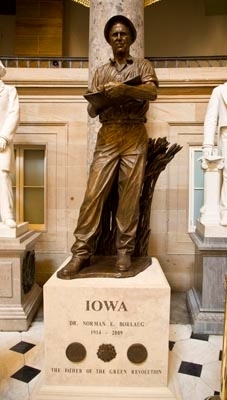
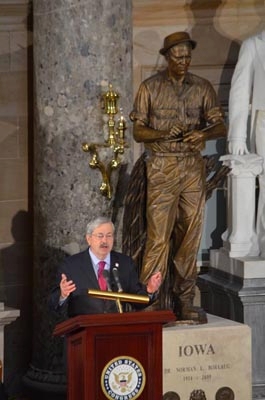
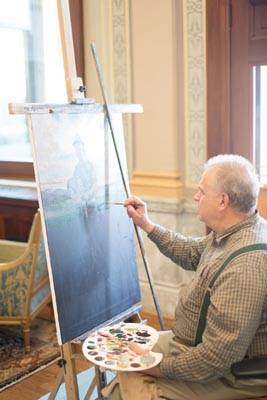
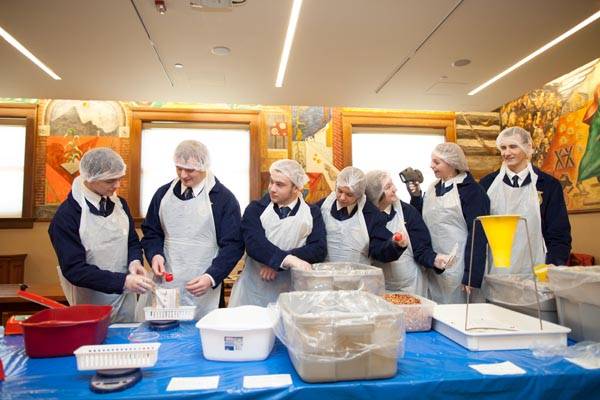
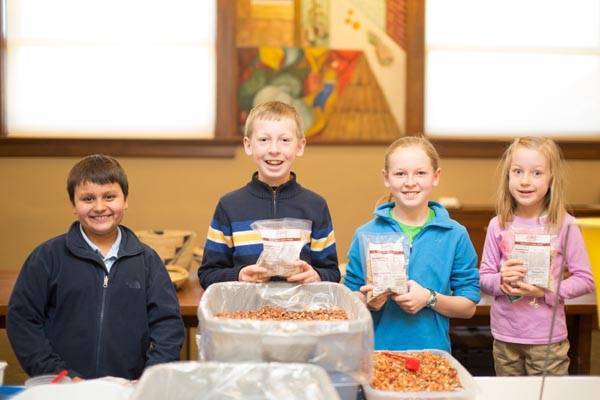
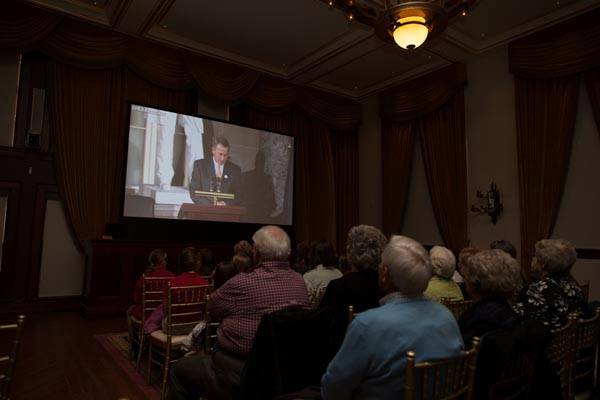
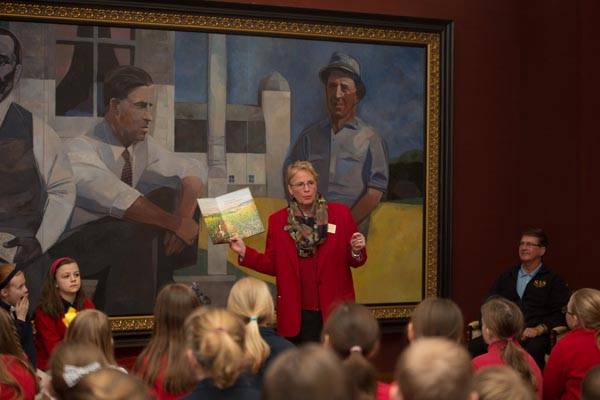
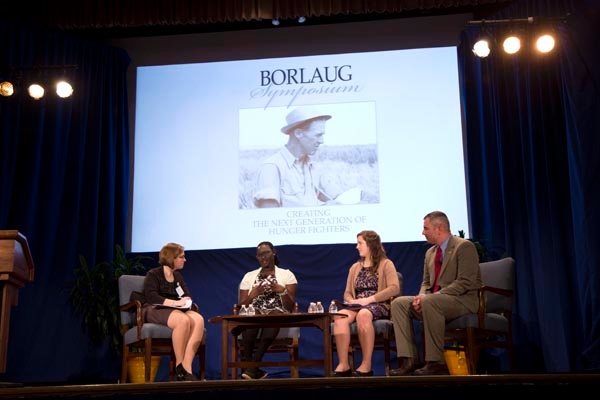
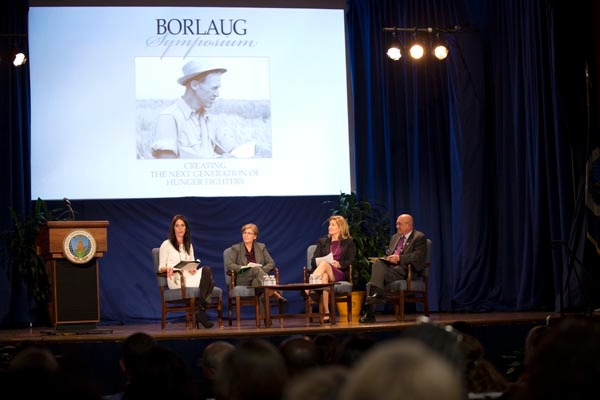
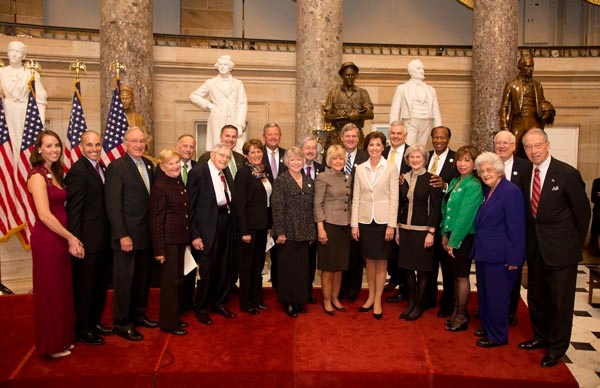
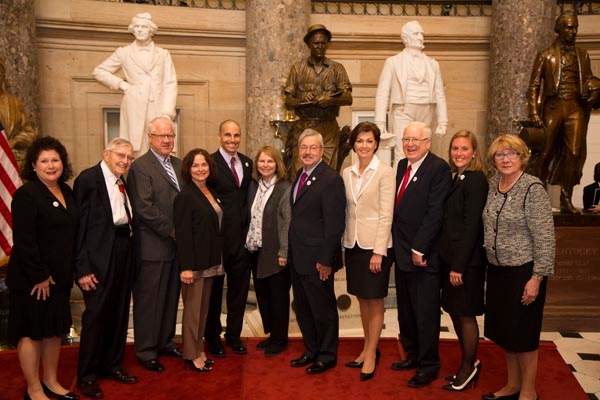
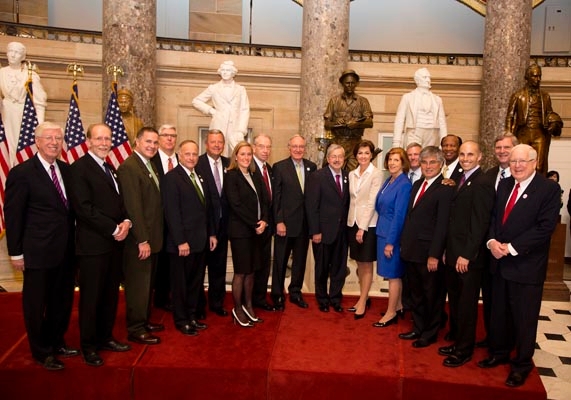
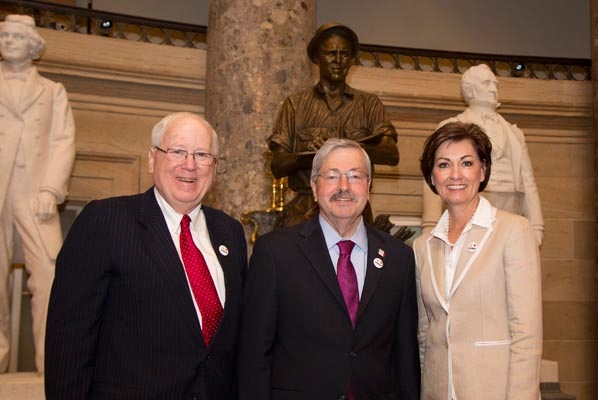
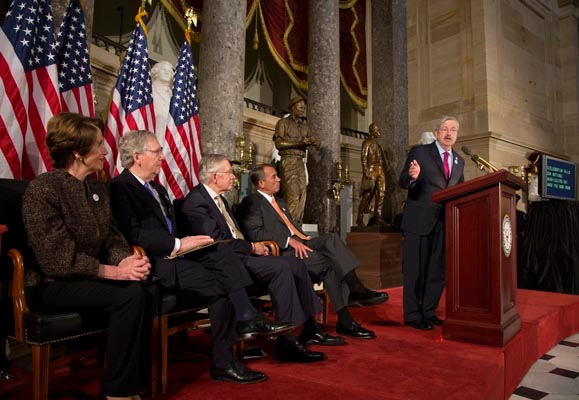
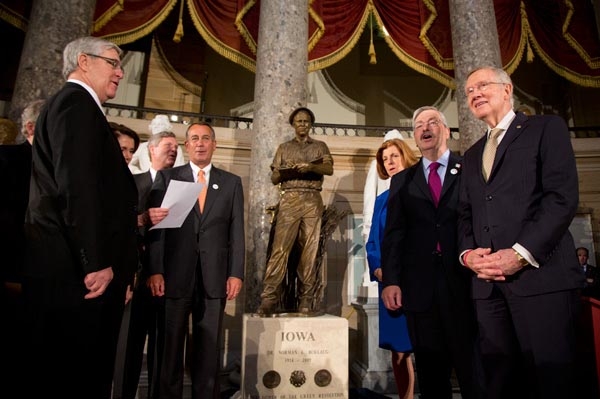
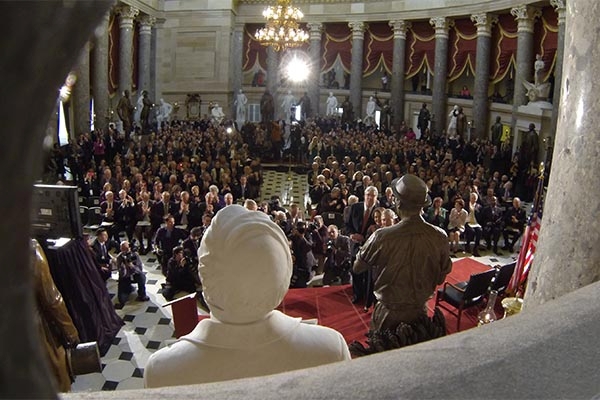
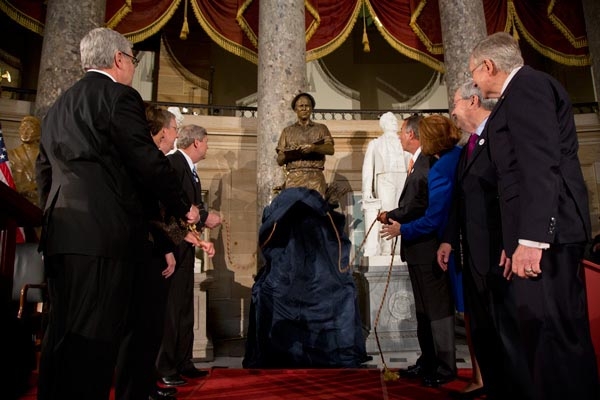
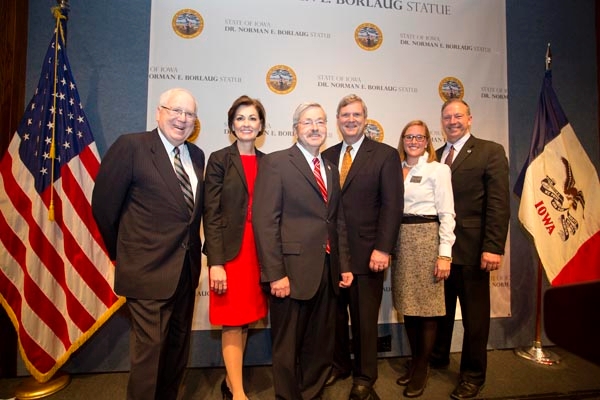
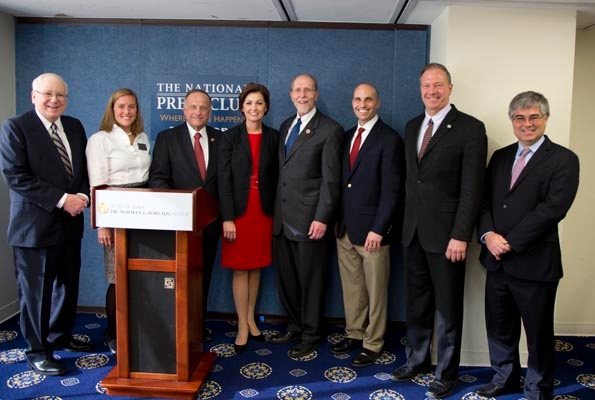
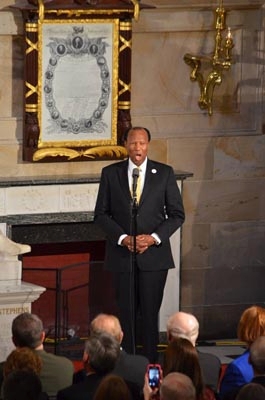
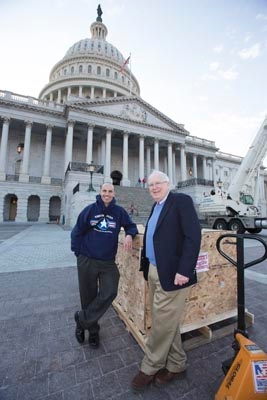
Photos: Borlaug Centennial and Statue Unveiling












Borlaug Videos
On October 16, 2014, The World Food Prize culminated its Norman Borlaug Centennial Year, awarding the
Prize to Dr. Sanjaya Rajaram, a renowned wheat breeder. In this video, we look at the numerous
ways Dr. Borlaug’s legacy has been celebrated and how it lives on.
“Play It Hard” Norman Borlaug Music Video Tribute
Created by John Boswell of Melodysheep, creator of the Symphony of Science series,
with CIMMYT and Biology Fortified.