
World Food Prize Foundation
2001 Borlaug Dialogue
October 18-19, 2001 | Des Moines, Iowa
2001 Borlaug Dialogue
More than 800 people attended The World Food Prize International Symposium, “Risks to the World Food Supply” on October 18-19 in Des Moines–what was arguably the most focused conference in the world on Agroterrorism and Bioterrorism since the attacks in New York and Washington.
Those who attended heard a series of experts and policy officials give riveting presentations which revealed that agriculture, a highly critical sector of the U.S. economy, could be extremely vulnerable to terrorists trying to introduce animal and plant diseases. The bottom line conclusion for many at the symposium was that such an attack would be easy to do and could produce “mass economic dislocation,” since agriculture makes up one-sixth of the U.S. national economy.
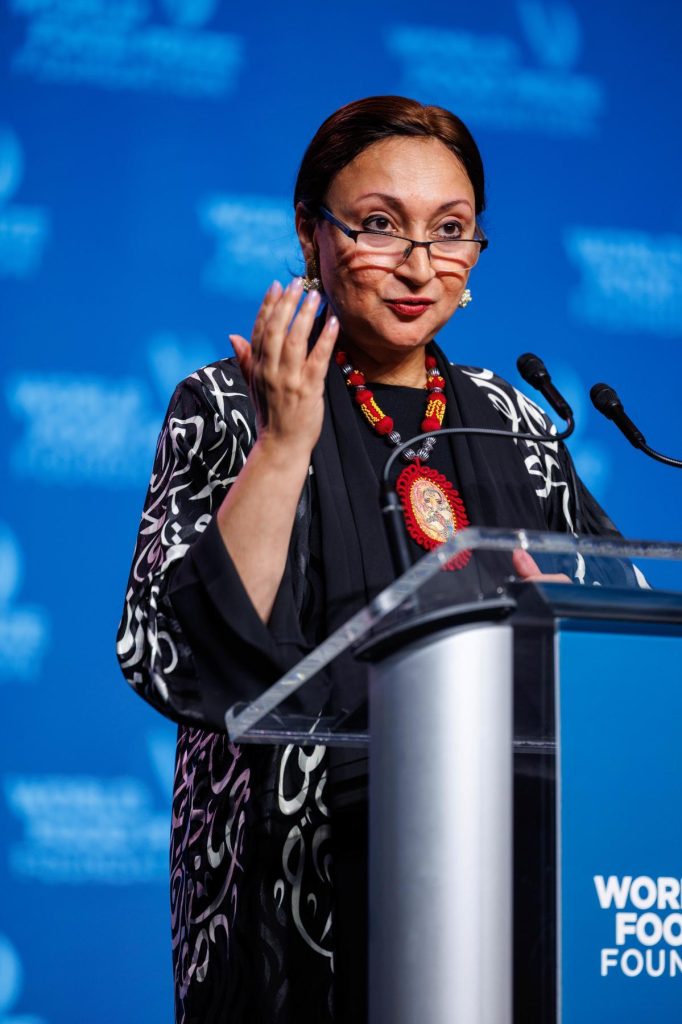
Peter Chalk, a Bioterrorism Analyst at the Rand Corporation, noted that the U.S. livestock industry is particularly vulnerable to agroterrorism because it is primarily made up of large operations that are highly concentrated, making the spread of diseases easier and an epidemic harder to control. He said that terrorists could covertly introduce anthrax, Foot and Mouth Disease or any one of 22 other foreign animal diseases into the U.S., which would be difficult to eradicate and enormously costly.
Chalk echoed a point made by World Food Prize President Kenneth M. Quinn in a September 23 television interview in which he stressed the need for a coordinated national reporting system that would promote a rapid and effective response to limit and contain any outbreak of such diseases.
David Shannon of the UK Department of Environment, Food and Rural Affairs told the Symposium attendees that the recent outbreak of Foot and Mouth Disease in Great Britain led to the slaughter of 5.5 million head of livestock at the cost of $3 billion.
Dr. Michael Doyle, Director of the Center for Food Safety at the University of Georgia, stressed the importance of workforce security in the food industry. He noted that the food processing industry has become so centralized, with one facility often distributing nationwide, that one act of bioterrorism could sicken millions of people.
Dr. Bernard Schwetz, the Principal Deputy Administrator of the U.S. Food and Drug Administration, gave a major presentation on “Food Terrorism,” which outlined the steps being taken by his agency to protect the U.S. food supply from any such efforts to taint it. While emphasizing that the probability of food terrorism is low, Schwetz explained that the FDA has developed plans closely linking his agency to state and local governments which would be the first to respond in case of a terrorist food attack. Moreover, he emphasized that the FDA has been meeting with growers, processors and shippers to put in place other mechanisms to keep the food supply safe.
The 2001 World Food Prize Laureate, Dr. Per Pinstrup-Andersen, brought both issues—world hunger and global terrorism—together in his Laureate Address, which argued that terrorism and the despair of the poor in developing countries are inextricably linked. He stressed that future stability will be linked to efforts by the developed world to eradicate hunger and malnutrition.
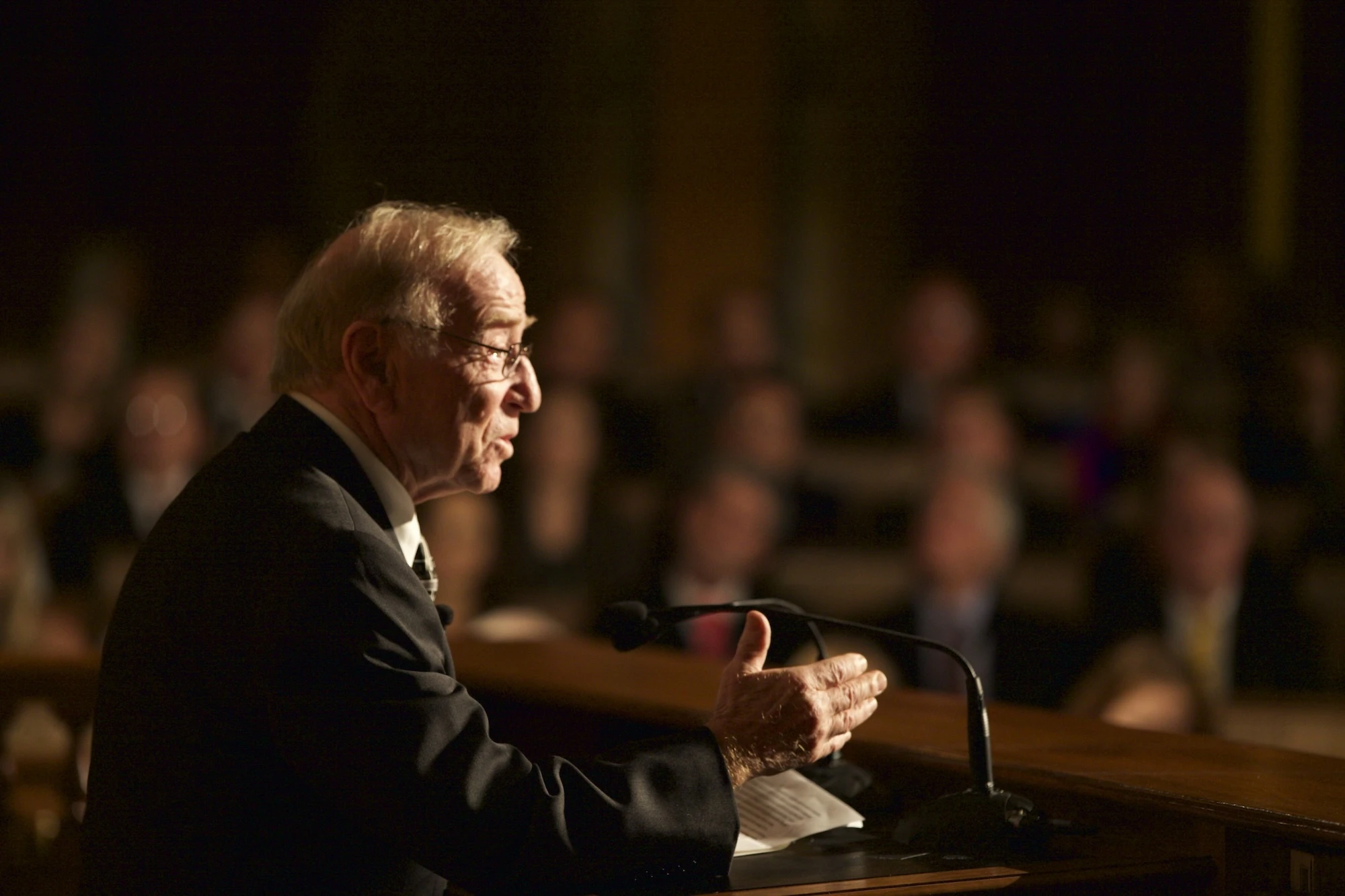
Dr. Norman E. Borlaug, Nobel Peace Prize Laureate and a founder of The World Food Prize, also spoke at the symposium. His topic was Biotechnology and the crucial role he sees for it in feeding and enhancing the nutrition of the more than one billion persons still living in tenuous food security, particularly in Africa, but also in Afghanistan and other parts of South Asia.
At age 87, Borlaug is still going strong, traveling around the world to promote greater attention to, and investment in, rural infrastructure (particularly roads and bridges), agricultural research and education. Dr. Borlaug believes all these are essential if we are to have the next “Green Revolution,” which will lift the remaining one billion people out of the misery of malnutrition and end pandemic poverty. As President of the Sasakawa 2000 Foundation, Borlaug has turned his efforts to sub-Saharan Africa—the last great frontier in the battle to end world hunger.
Transcripts by Agenda
9:00 am: Welcome to the Symposium:
Ambassador Kenneth M. Quinn, President of The World Food Prize Foundation
9:05 – 9:35 am: Hunger Hot Spots:
Catherine Bertini, Executive Director, The World Food Programme
9:35 – 9:45 am: Iowa Welcomes the Symposium:
John Ruan, Chairman, The World Food Prize Foundation
The Honorable Sally Pederson, Lt. Governor of Iowa
9:45 – 10:15 am: Trends in Reducing Global Hunger:
Hartwig de Haen, Assistant Director-General, UN Food and Agriculture Organization (TRANSCRIPT)
10:15 – 10:45 am: The Threat of Agroterrorism and Bioterrorism:
Peter Chalk, Biological Agroterrorism Analyst, National Security Division, RAND Corporation (TRANSCRIPT)
10:45 am – 12:15 pm: Risks to Sustainable Agricultural Development in Africa:
- What are the Keys to Enhanced Nutrition and Increased Child Survival?
- How Will HIV/AIDS Impact Food Production?
Session Chair:
George Abalu, Principal Regional Advisor for Food Security and Sustainable Development, UN Economic Commision for Africa
Speakers:
Jerry Wolgin, Principal Economist, Africa Region, The World Bank (TRANSCRIPT)
Debrework Zewdie, Manager, HIV/AIDS Africa Region, The World Bank (TRANSCRIPT)
Marcela Villareal, Chief of Population Programme Service, UN Food & Agriculture Organization (TRANSCRIPT)
12:30 – 2:00 pm: Luncheon Session:
Ian Johnson, Vice President, The World Bank, and Chair, Consultative Group on International Agricultural Research
Session Chair:
Floyd Horn, Administator, Agricultural Research Service – USDA (TRANSCRIPT)
2:10 – 4:00 pm: Globalized Trade and the Threat of Pandemics
Foot-and-Mouth, “Mad Cow”, and the Globalization of Livestock Disease.
- How Real a Concern Are Agroterrorism and Bioterrorism?
- Microbiological Contamination
Speakers:
David Shannon, Chief Scientist, United Kingdom Department of the Environment, Food and Rural Affairs (TRANSCRIPT)
Hank Fitzhugh, Director General, International Livestock Research Institute, Kenya (TRANSCRIPT)
Michael P. Doyle, Regents Professor and Director, Center for Food Safety, University of Georgia (TRANSCRIPT)
Harley Moon, Ramsey Chair in Veterinary Medicine, Department of Veterinary Pathology, Iowa State University (TRANSCRIPT)
4:00 pm: Symposium adjourns for the day
7:00 – 8:30 pm: World Food Prize 15th Anniversary Celebration / Laureate Award Ceremony
Location: Civic Center of Greater Des Moines, Des Moines, IA
7:45 – 9:00 am: Breakfast Session: Food Terrorism – Views From the U.S. Food and Drug Administration:
Location: Des Moines Marriott Hotel, 3rd floor
Bernard Schwetz, Acting Principal Deputy Commisioner of Food and Drugs, U.S. Food and Drug Administration
9:00 – 10:45 am: Can the Land Sustain Needed Production? – Reclaiming Marginal Lands and Exploiting Tropical Soils: The Cerrado in Brazil and Its Future Role in World Food Trade
Location: Des Moines Marriott Hotel, Ballroom
Session Chair:
Elizabeth Becker, Chief Agricultural Writer, The New York Times
Speakers:
Pedro Sanchez, Director General, ICRAF (TRANSCRIPT)
G. Edward Schuh, Director, Freeman Center for International Economic Policy, Hubert H. Humphrey Institute for Public Affairs (TRANSCRIPT)
Paul Vlek, Director of GEF, University of Bonn (TRANSCRIPT)
10:45 am – 12:30 pm: Will There Be Enough Freshwater?
- The Impact of Climate Change on Food Production
- How to Prevent Hydropolitical Conflicts
- Raising Crops under Stress Conditions
Session Chair:
Margaret Catley-Carlson, Director, Global Water Policy Council
Speakers:
Jonathan Lash, President, World Resources Institute
David Seckler, (ret.) Director General, International Water Management Institute (TRANSCRIPT)
Aaron Wolf, Oregon State University
2:10 – 4:00 pm: Laureates’ Panel: Is the Credibility of Science at Risk?
- What Is Needed to Sustain Public Research?
- How Will the Questions about Biotechnology and Genetic Modification Be Resolved?
Session Chair:
Robert Havener, World Food Prize Council of Advisors Member
Speakers:
Norman E. Borlaug, Nobel Peace Prize Laureate (TRANSCRIPT)
Rebecca Goldburg, Environmental Defense (TRANSCRIPT)
Patrick Moore, President, Greenspirit
Response from:
World Food Prize Laureates
4:00 pm: Symposium adjourns
8:30 am – 4:00 pm: Youth Institute Symposium: “Can All the World Be Fed? Lessons from the Life and Work of Dr. Norman E. Borlaug on the Issues of Nutrition, Water, and Biotechnology.”
Location: Carver Conference Center, Pioneer Hi-Bred International, Johnston, IA
8:30 – 10:00 am: Plenary Session – Introduction and Welcome
10:00 am – 12:00 pm: Breakout Sessions – Students prepare and discuss with Youth Institute Facility
12:00 – 12:30 pm: Plenary Session – Group (student) leaders report highlights of their session.
12:30 – 1:30 pm: Lunch and Distribution of Student Certificates – Carver Center Cafeteria
1:45 – 3:00 pm: Plenary Session – Presentation by 2001 Interns
3:00 – 3:30 pm: Youth Institute Wrap Up / Adjourn