Princess Tatjana of Liechtenstein, FAO Director-General, agriculture ministers and agtech innovators also tackle how to get innovation to farmers
Nobel Peace Prize Laureate Malala Yousafzai, FAO Director-General QU Dongyu and agriculture ministers from three countries joined scientists, farmers and entrepreneurs to tackle the barriers between breakthrough and field on day two of the 2026 Norman E. Borlaug International Dialogue. The focus of the day is on one of food security’s most urgent challenges — making sure the innovations transforming agriculture actually reach the farmers who need them.
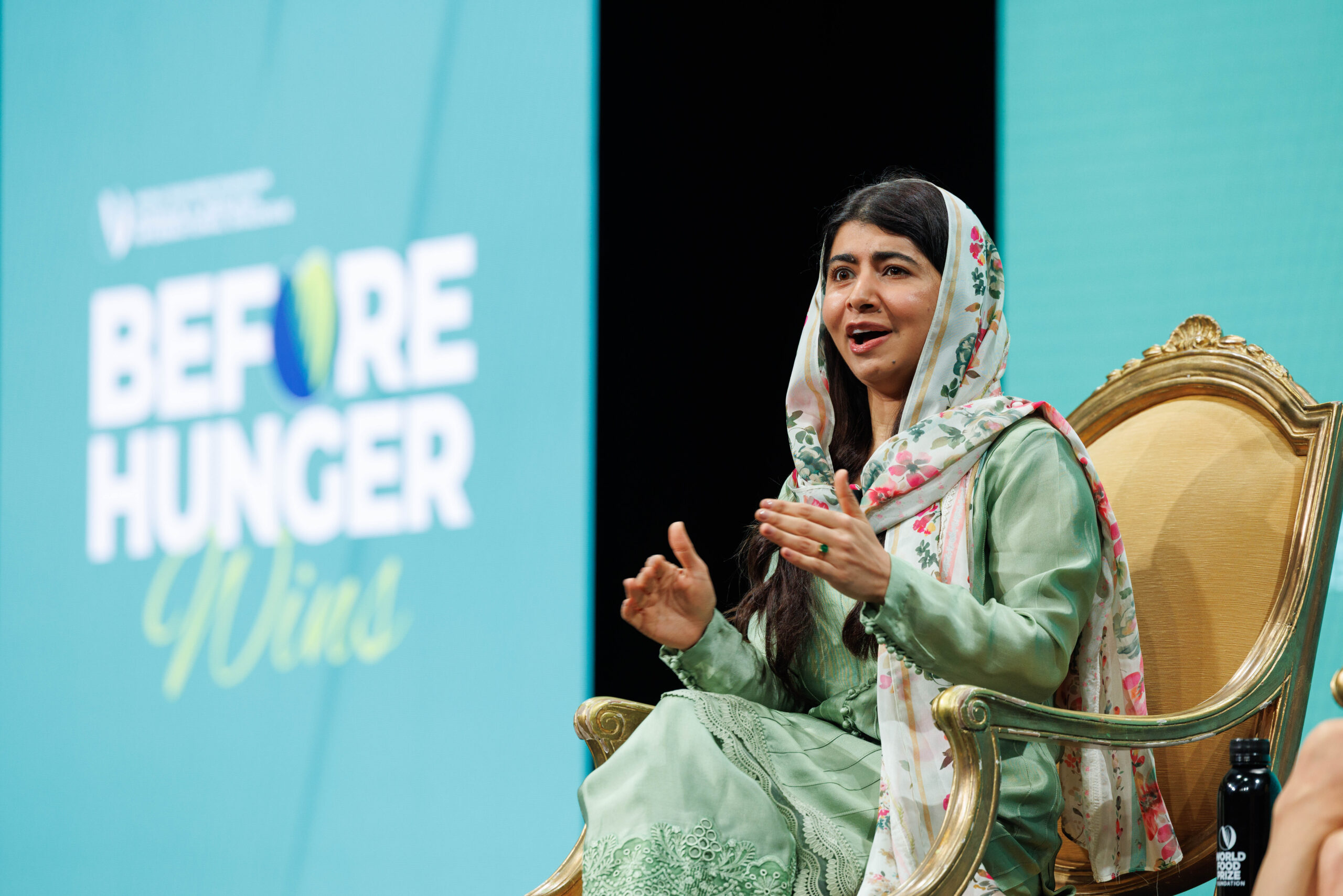
2014 Nobel Laureate Malala Yousafzai joined Pulitzer Prize winning journalist, Sheryl WuDunn for a conversation on the deep links between hunger and girls’ education. Malala reflected on what she has learned about changing the world, and made the case to agricultural leaders that educating girls is part of the solution to hunger, “We cannot go forward when half of us are held back.” Malala also discussed why climate shocks such as droughts, floods and crop failures so often cost girls their education first, and shared what she saw on her recent return to Pakistan’s Swat Valley.
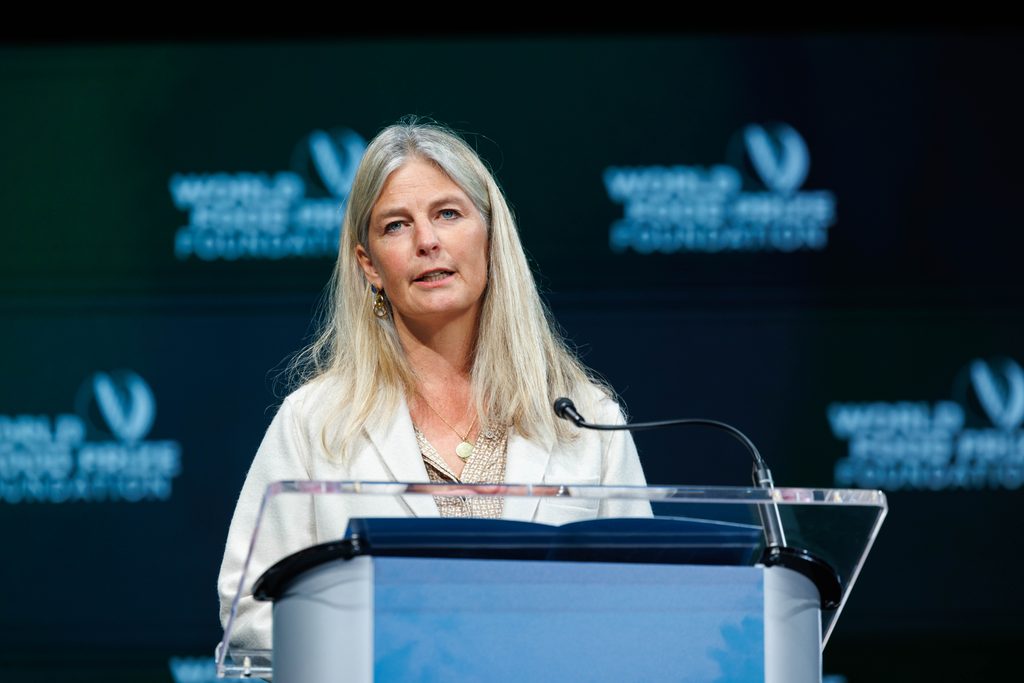
Her Serene Highness Princess Tatjana of Liechtenstein called for urgency in turning innovation into action, telling the audience that long-term thinking must not slow progress. “Innovation works best when long-term responsibility has the courage to act quickly,” she said.
FAO Director-General QU Dongyu delivered a keynote address on what it will take for agricultural progress to reach farmers at a global scale. He highlighted international cooperation, political will, strong institutions, public investment and functioning markets as the foundations for turning innovation into impact.
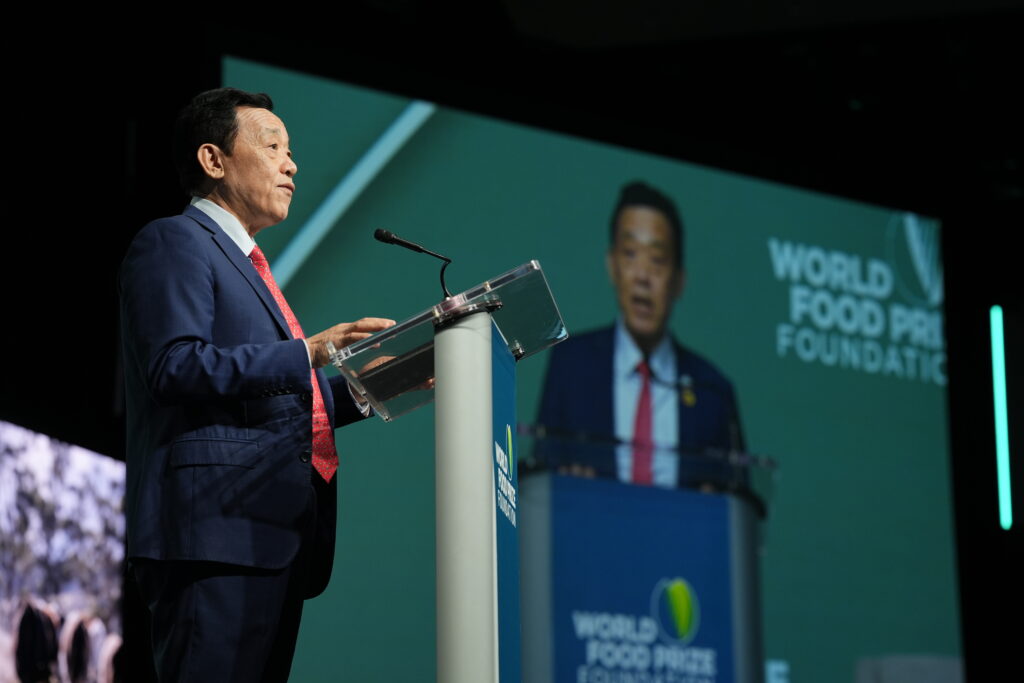
QU Dongyu during What Will It Take To Feed the Future? at the Norman E. Borlaug International Dialogue here today, Wednesday October 21, 2026, in Des Moines, Iowa.
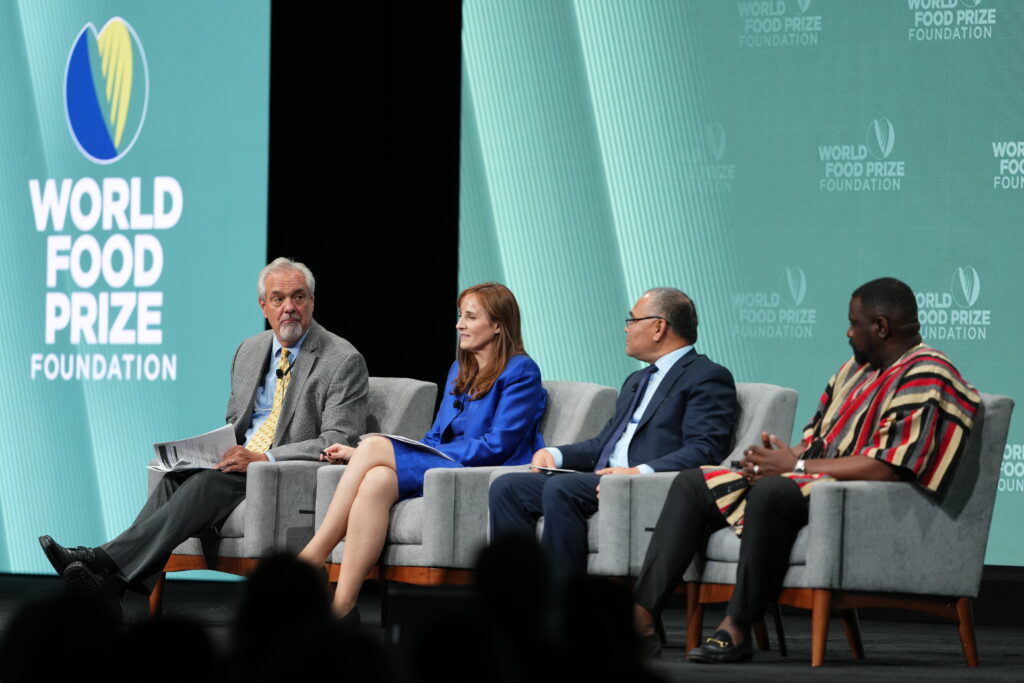
Agriculture ministers from three continents — Hon. Ibrokhim Abdurakhmonov, Minister of Agriculture, Republic of Uzbekistan; John Dumelo, Deputy Minister of Food and Agriculture of the Republic of Ghana; and Meghan Hanson, Deputy Assistant Secretary
Bureau of Disaster and Humanitarian Response — shared their countries’ experiences, challenges and solutions in getting new technologies into farmers’ hands. They spotlighted the policies and investments that make the difference.
A panel explored why innovation so often fails to reach the farm, with Ranveer Chandra of Microsoft, Giles Oldroyd of the Donald Danforth Plant Science Center, Jason Wargent of BioLumic and Taiwanese farmer Jia-Cih Yang. Leaders from CIMMYT, IICA and IFAD made the case for investing to prevent food crises before they start.
The day will close with the finals of the Innovate for Impact Challenge, as four agtech startups, Lyrata, CeluNova, SciPhage and Biotech4life Soluções, pitch to a panel of judges for $130,000 in cash prizes.